

Cula Cernătescu, Cernătești (Dolj) – a fortified tower house: history, museum and documentary film
If you set out from Craiova towards the north-west, once you leave the commune of Breasta the road winds between hills and seems to lead nowhere. After about 25 kilometres you reach Cernătești, and a few kilometres further on, on the right, stands one of the few cule (fortified tower houses) still standing in Dolj County. It is the only one in good condition that can be visited. That is because the last heir of the Cernătescu family, Jeana Ghica Cernătescu-Suculescu, donated it to the community together with a large sum of money for its renovation.
Before the recent rehabilitation, repairs were made in 1997, when the commune celebrated 400 years since its first documentary mention, and in 1999, the year in which the last descendant of the Cernătescu family died. She was brought from Belgium and buried beside her ancestors, next to the Church of St Nicholas in Cernătești, which the family built in 1820–1827.
Text translated from the study produced in 2016 in the “Green School Education” project. The description of the museum shows the cula as it was before the rehabilitation completed in 2023.
Documentary film: Cula Cernătescu
The 16-minute film, made in the same project, presents the cula, the museum and the surroundings. The narration is in Romanian.
A short history
The exact date of the cula is not known. Since the village appears in 16th-century documents, oral traditions based on genealogies and etymologies place its construction in the reign of Michael the Brave, in whose army served the “general of the sword” Cernat, later a spătar (sword-bearer).
A more plausible dating is the 18th century, when it was built by the Cernătești boyar family. Local history records that as early as the 14th century, by order of Prince Mircea the Elder, a military structure was raised here by the brave Dimitrie Cernat. The first documentary mention of the village dates from 5 October 1597, in the time of Michael the Brave, when “Cernăteștiul in Dolj is dedicated by princely order to the Holy Monastery of Stănești”.
Right next to the cula is the Petrache Cernătescu school, named after the man who introduced schooling and founded the school in Cernătești in 1837.
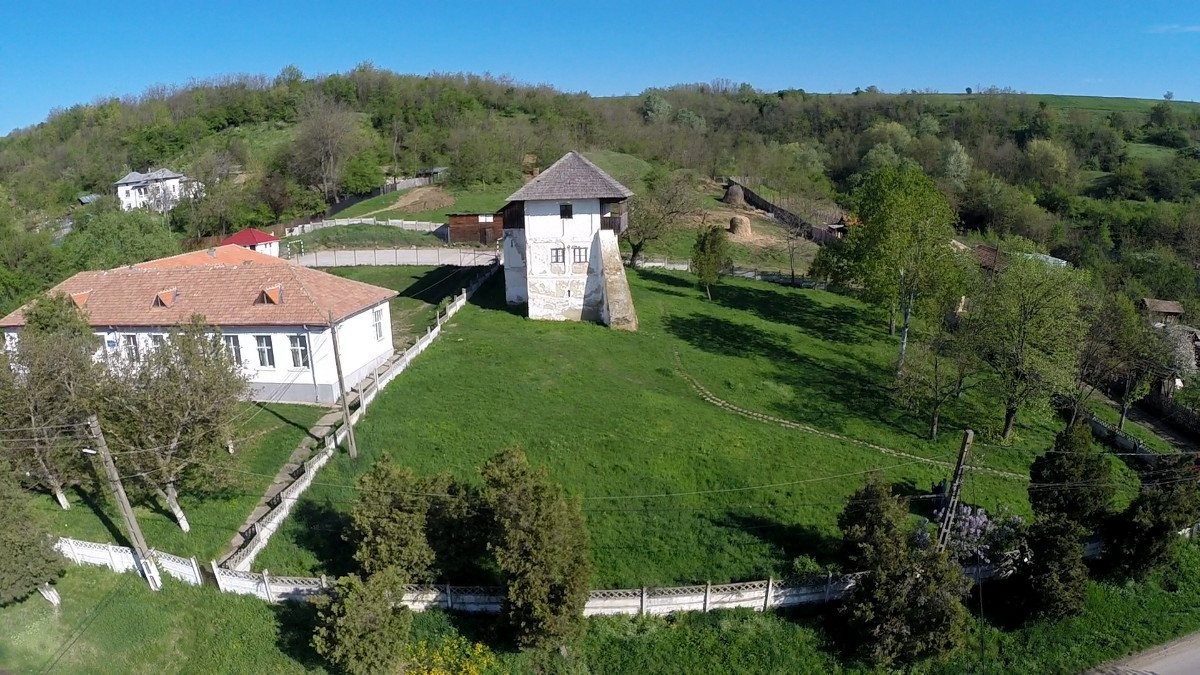
Each village of the Cernătești commune has its own story, whether Cornița, Rasnic, Țiu or Cernătești. The village of Cernătești, for example, was called Bucur in the 14th century and Trestenic in the 15th–16th centuries.
Documents show that at the first administrative reform of Wallachia this was the first and only settlement on the road between Drobeta Turnu Severin and Craiova. At that time people lived by families in dugout houses, in isolated places. The largest settlement was at Trestenic, a small valley south of today’s village.
It is known that in the 13th century merchants from the small market town of Cerneț (then the capital of Mehedinți County) collected produce from the locals and took it to the Austro-Hungarian Empire. To make collection easier, these itinerant merchants set up permanent houses where sellers could come. The first settlements formed south of the Obedeanca stream, from the foot of the hill, across the Trestenic plateau, to the top of the other hill, practically around today’s cula. Merchants were known by their first name and the name of the place they came from. One such merchant, settled before 1500 in the former Trestenic settlement and also a livestock breeder, was Dimitrie Cernat. His cattle pen was on Cernat Hill, which still bears his name.
The people of these places had dugouts or houses of oak beams, roofed with maize stalks, reeds and straw. In the middle of the village were the church and the cemetery. In 1593 the Turks set fire to the village and the church.
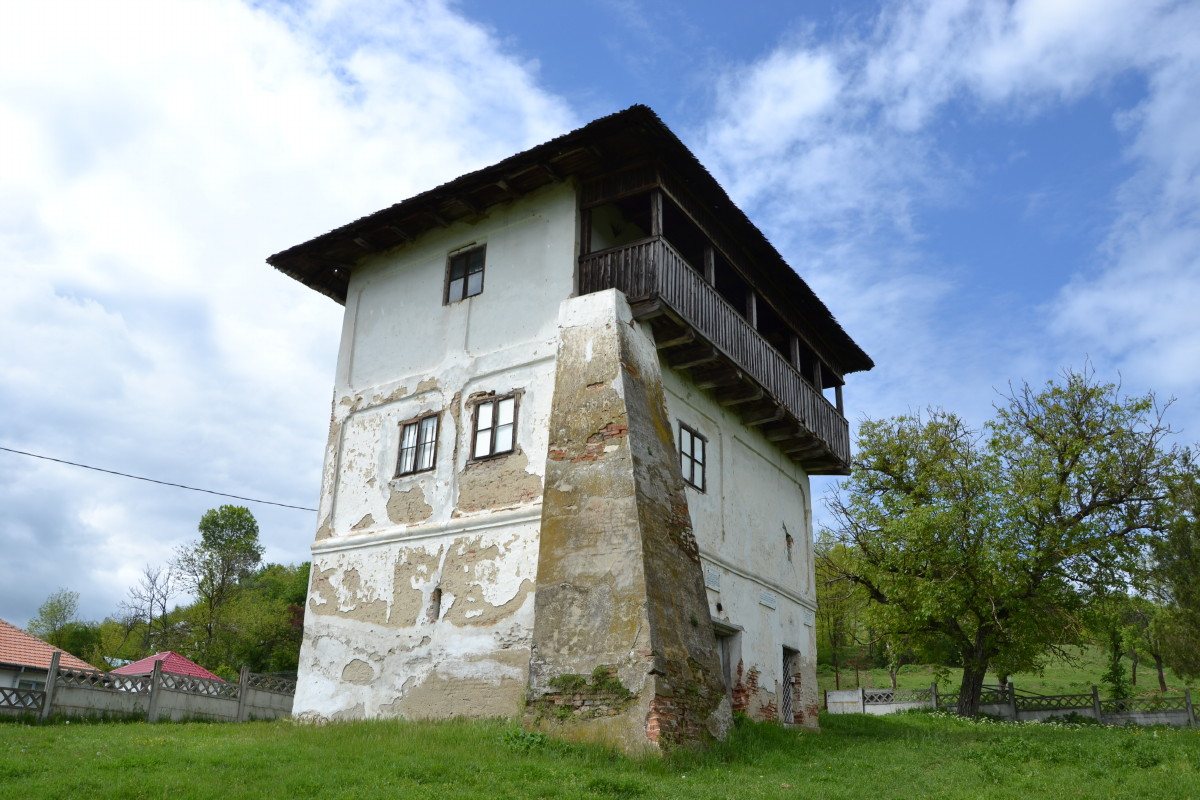
The frequent Turkish raids made fortified houses necessary. The hilly regions of Oltenia have a type of building characteristic of the area and almost unique in Romania, called cule. The word comes from the Turkish kule, meaning tower.
The original military purpose of these buildings is therefore clear. Cule are typical of the 18th and 19th centuries and appeared out of the need for protection. They were boyars’ residences, built to defend the property and lives of their families against raids by Ottoman plunderers from south of the Danube, and also against outlaws and other bands of attackers in those troubled times. Built to be hard to take and placed in strategic spots, they worked as military fortifications that increased the boyars’ influence and gave them an advantage in the frequent local conflicts. Besides being a home, the cula protected its owner not only from outside danger but also from possible uprisings of his own serfs. For this reason the land around most cule was cleared, so that attackers could not approach unseen.
The Cernătescu cula did not stand alone, however: it was part of the buildings of the Cernătești manor, which appear in photographs taken before the First World War.
The cula and the museum
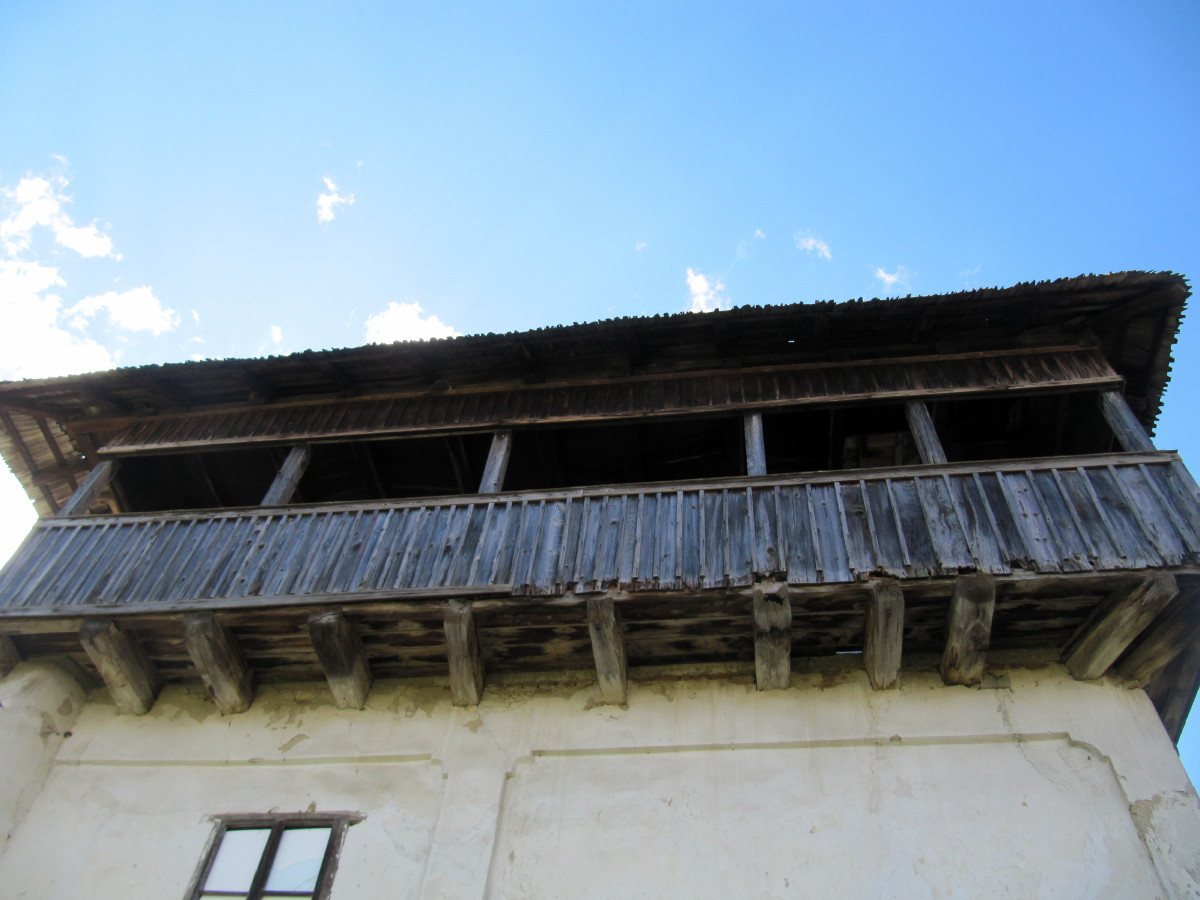
As a rule, cule were tower-shaped, with two or three storeys and loopholes from which one could shoot at any part of the courtyard. Although cule were built in the same period in Serbia and Albania, those in Romania have a distinctive architectural feature that also gives them aesthetic quality: the porch or cerdac (loggia). The skilled folk craftsmen who built them adorned them with this element, placed on the top floor, which gives charm and balance to the whole façade. The Cernătești cula has a cerdac made entirely of wood, cantilevered at the top of the façade. Its balustrade is divided into equal openings separated by wooden posts. The steep roof is of wood, covered with shingles.
Access to the cula was through a massive door which, in case of assault, could be blocked from inside with several beams. The main façade has two entrances: a door with two massive oak leaves leading to the stairs to the first level, and another, equally massive and cleverly bolted, to the cellar with its narrow loopholes. There are places in the building from which you can see out without being seen from outside.
The structure is of brick masonry and oak beams. The walls become thinner from the ground floor (85 cm) to the roof frame (50–60 cm). Each level has two rooms. On the ground floor are the cellar and the entrance hall with the stairs. Four deep niches and two splayed loopholes are preserved in the cellar.
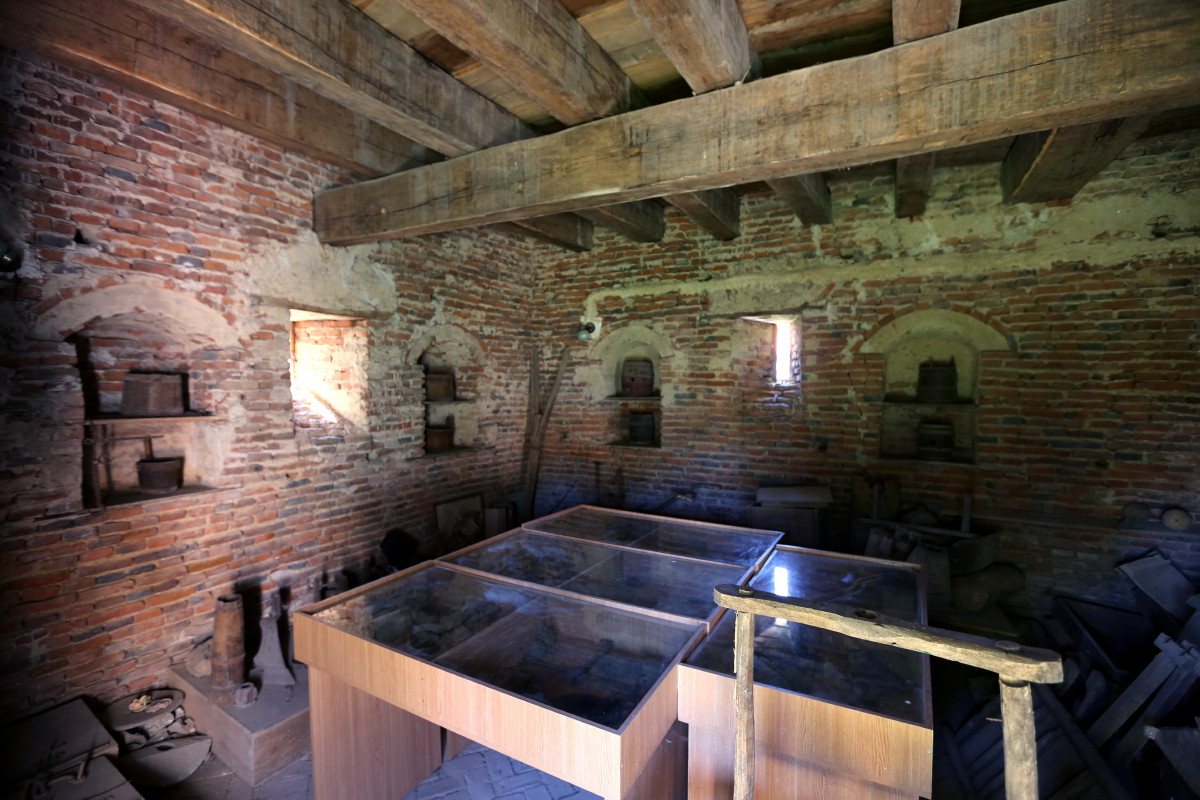
Declared a historical monument of national importance in 2000, Cula Cernătescu is also of cultural interest, because a museum was set up here in 1972. A few teachers who loved their village collected old objects and tools from the area to make a museum. Teacher Nicolae Pîrvănescu first set up a museum corner in the village school and then moved everything to the cula.
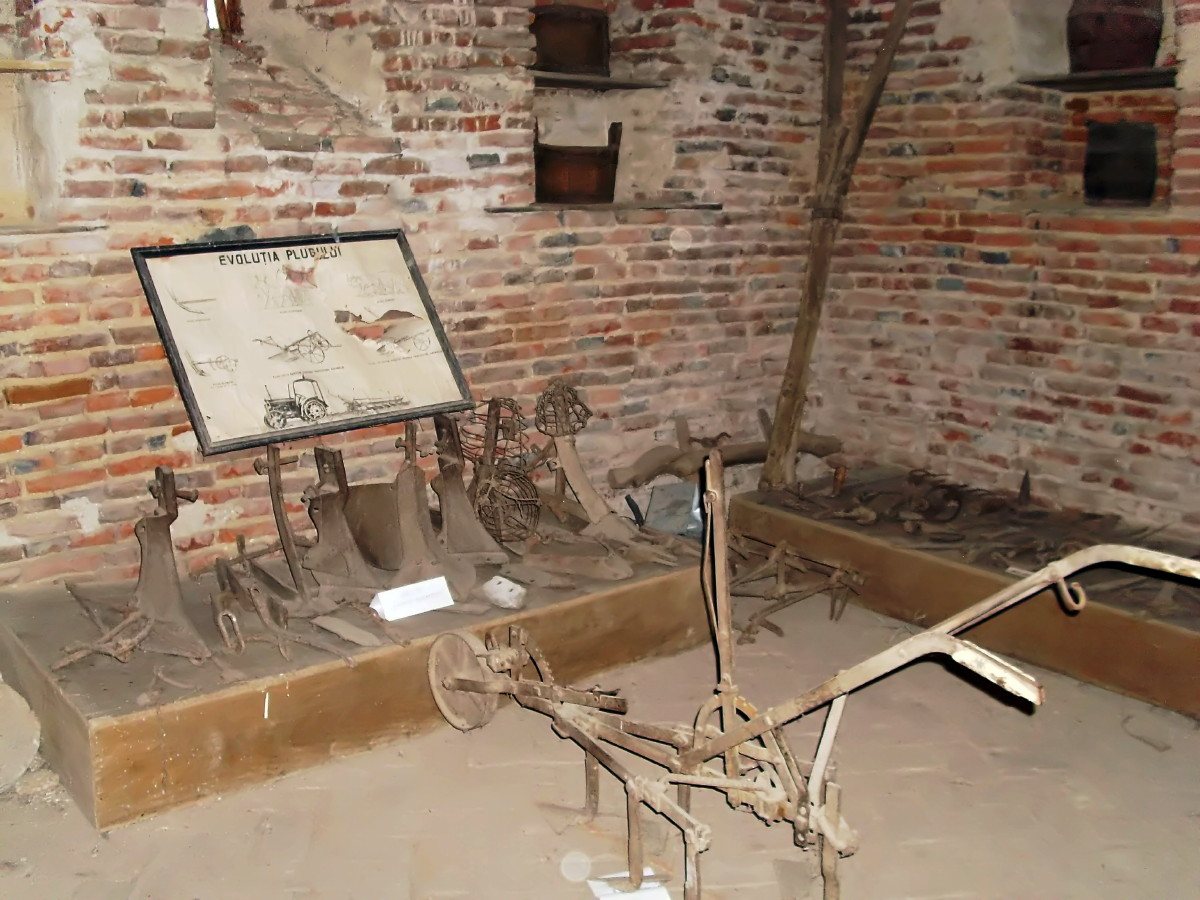
On the ground floor, in the cellar, old tools and objects are displayed, related to the main occupations of the villagers, especially agriculture. They are traditional tools, tens or even hundreds of years old, which belonged to people of the village. A special place is given to the plough, perhaps the most precious object in a household, and to many items related to beekeeping.
Here there is also an opening in the wall, like a window. It is the secret room in which the boyar hid his wealth in case of attack.
Climbing the wooden stairs and passing under the arched vaults, you reach the first floor, with other museum pieces: old coins, the first school bell, and a varied range of objects related to the spiritual, cultural and social life of the bourgeoisie of the last century, and of the Cernătescu family in particular. Paintings, military items, documents and old books are on display. Weapons used in the conflicts of the time, uniforms worn by members of the Cernătescu family, a collection of coins and banknotes and writing instruments take us into a world that has disappeared but remains an important moral and historical landmark for the area.
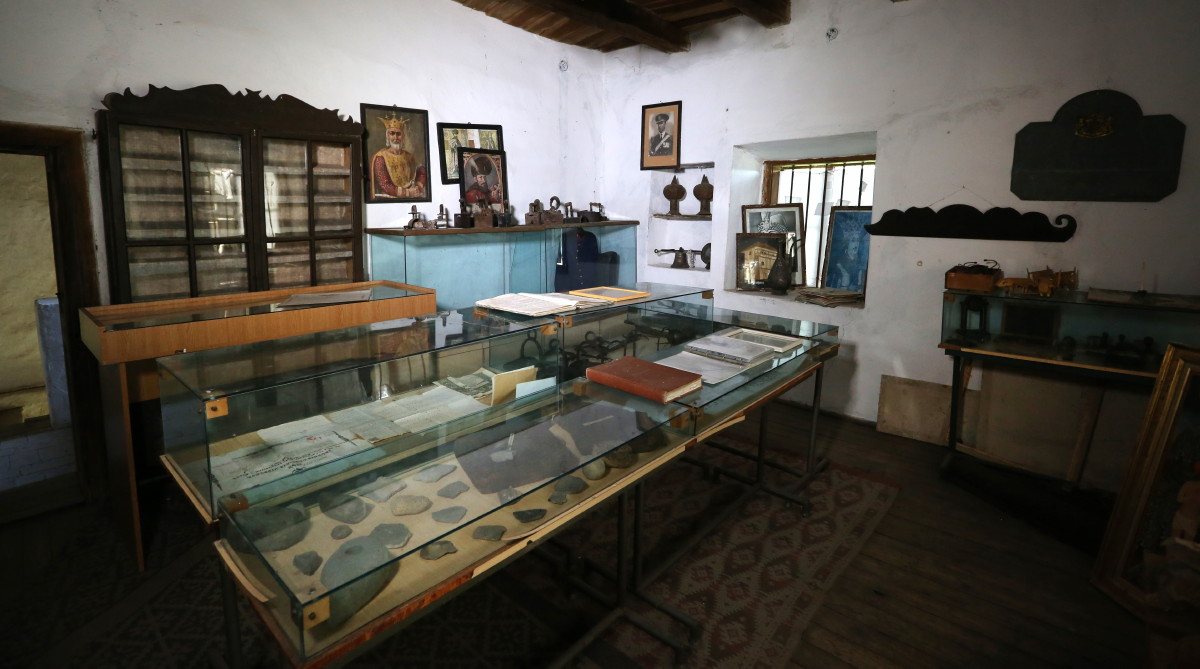
The last descendant of the Cernătescu family put together a family album with photographs of the last generations. From period photographs and newspaper articles look out the most important members of a family that gave Romania politicians, ministers, prosecutors, officers, bankers, businessmen and artists of world renown.
Of interest are the two plaques recording the founding of the Cernătești school and the School Cooperative of 1935, in the time of the Kingdom. Visitors can leaf through a few old books in Church Slavonic, mostly religious, printed in the mid-19th century. There are also historical documents mentioning the area, one issued by Michael the Brave in 1597 and another by Prince Grigore Bibescu. The family tree of the Cernătescu family can be studied as well, starting with Mihai Balica Cernătescu, spătar “around 1700”.
Also on the first level are fossils of animals that lived in the area 1–5 million years ago and, above all, objects and documents attesting the uninterrupted presence of people in these parts.
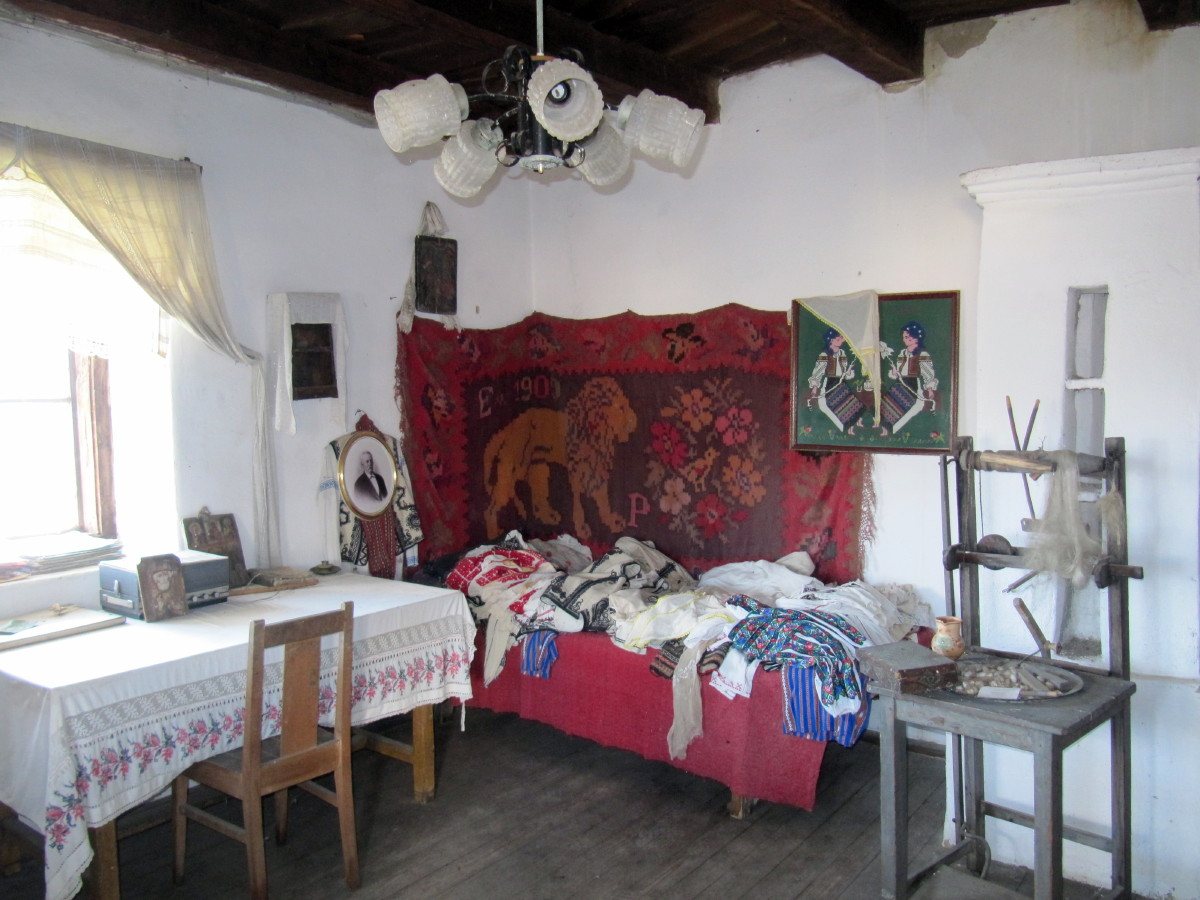
On the second floor a peasant house interior has been carefully reconstructed with original objects donated by villagers.
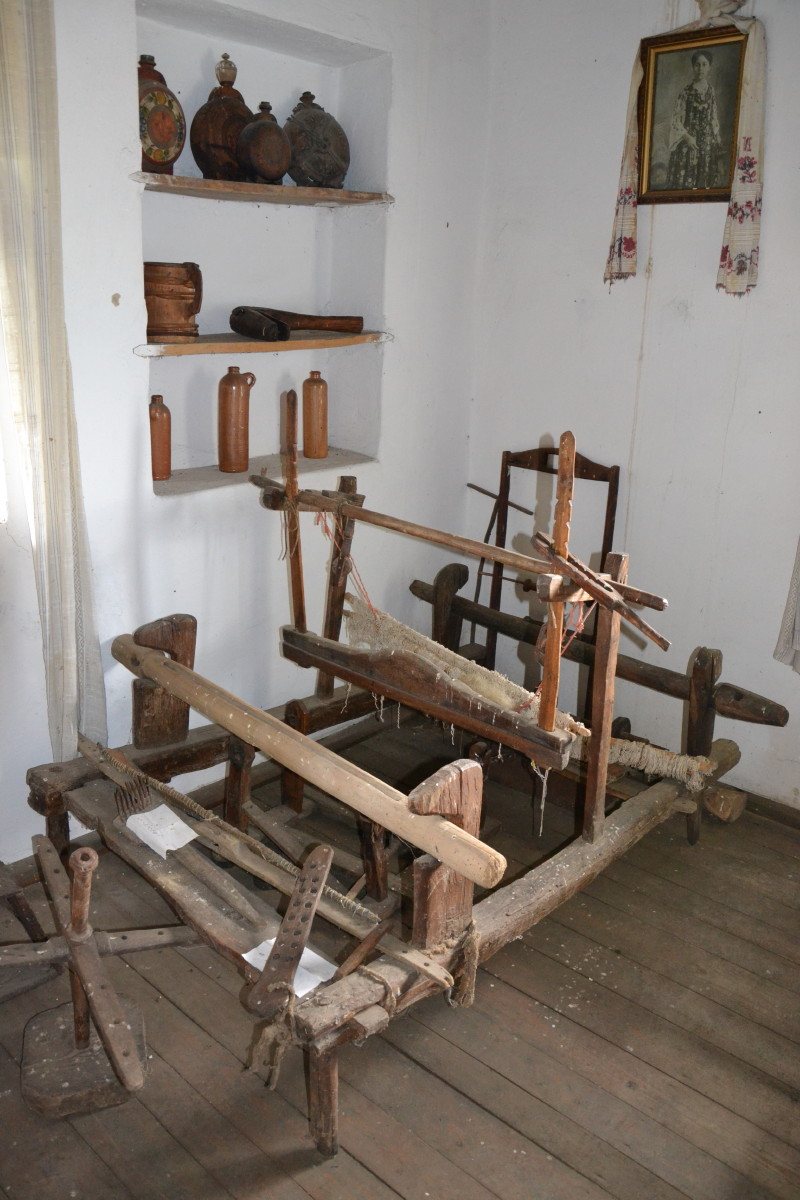
The first room is the bedroom, with a bed, pillows, rugs and carpets with typical Oltenian motifs, home-made clothes, other textiles and embroidered items, and a loom. Icons could not be missing from the bedroom, painted in the traditional naive style, as proof of the importance of faith and Christian customs in everyday life at that time.
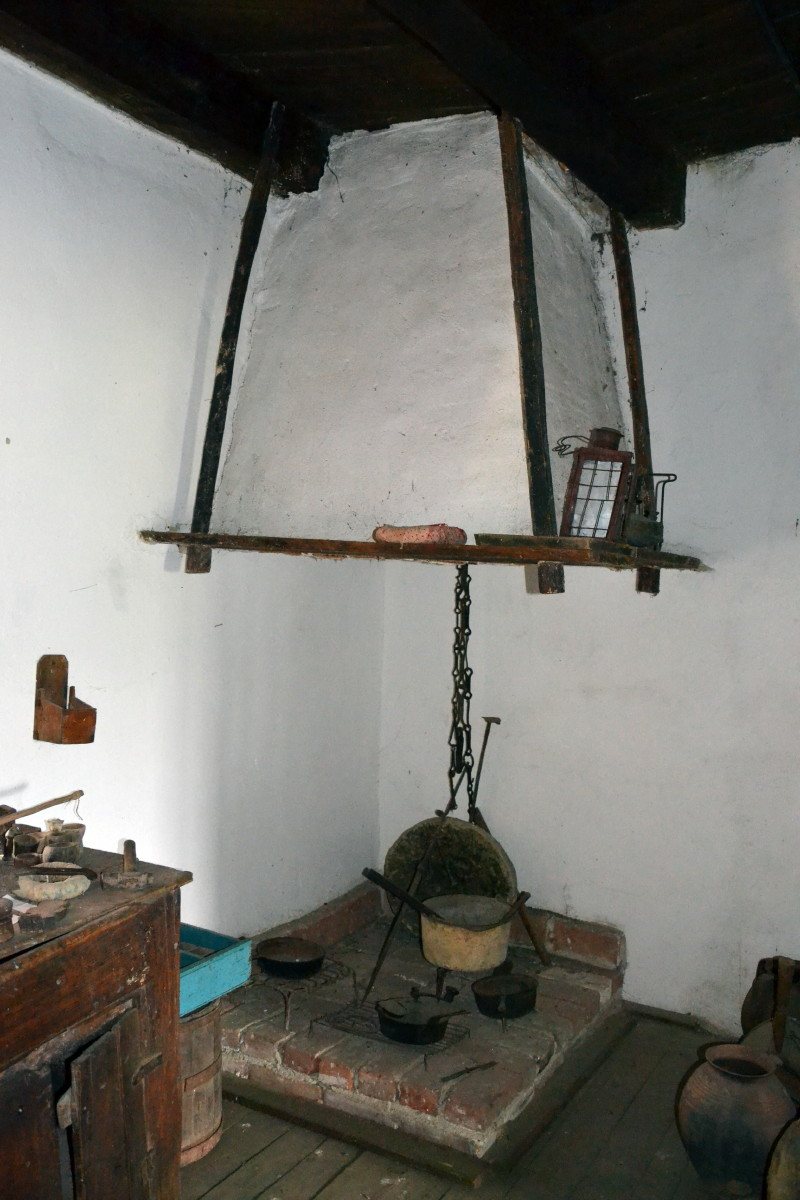
The second room is for preparing food and eating. The hearth with its hood (ogeac), where the fire was made and bread was baked, earthenware vessels and the round table surrounded by small stools are the everyday landmarks of local life. Wooden objects such as spoons of various sizes and shapes, ceramic and clay plates and bowls, jugs and irons were all found in a household of the last century and are only some of the objects kept in this room of the museum.
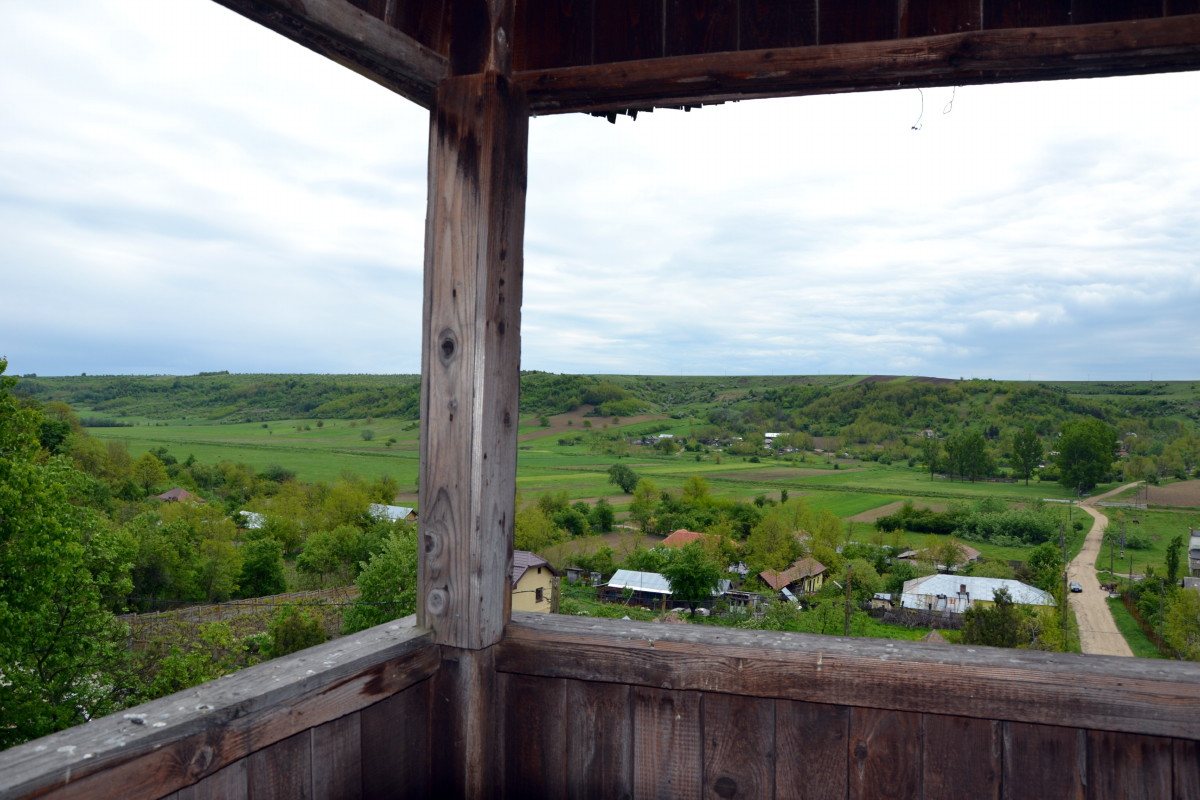
A special view opens up when you step out onto the porch. From here the whole panorama of the area could be observed. What seems to us today an opportunity to admire the surroundings was in the past a matter of great strategic importance: this was where the boyar sat and kept a strict watch on any suspicious movement.
The museum is managed by the Oltenia Museum in Craiova. After the study was written, the cula was rehabilitated with European funds and reopened to visitors in September 2023.
Visitor information
- Address: Cernătești village, Cernătești commune, Dolj County, about 35 km from Craiova
- Managed by: Oltenia Museum, Craiova
- Status: rehabilitated with European funds and reopened on 15 September 2023
- Phone: +40 786 501 623 (the cula), +40 251 417 756 (Oltenia Museum secretariat)
- Website: muzeulolteniei.ro
Information checked in November 2026. Opening hours are not published separately for the cula; call before you travel.
Download the study
Cula Cernătescu – study (PDF in Romanian, 13 pages, 4 MB), with all the photographs. The practical information in the study dates from 2016.
About the project
The film was made by Asociația Mereu pentru Europa, and the study was written in the same project: “Green School Education as a Promotion of Sustainable Use of Cultural and Natural Heritage and Resources”, code 15.2.1.001 (February 2016 – August 2017), co-financed by the European Union through the European Regional Development Fund under the Interreg V-A Romania–Bulgaria Programme. The content of this material does not necessarily represent the official position of the European Union.