

The “Alexandru Buia” Botanical Garden, Craiova – sections, history and documentary film
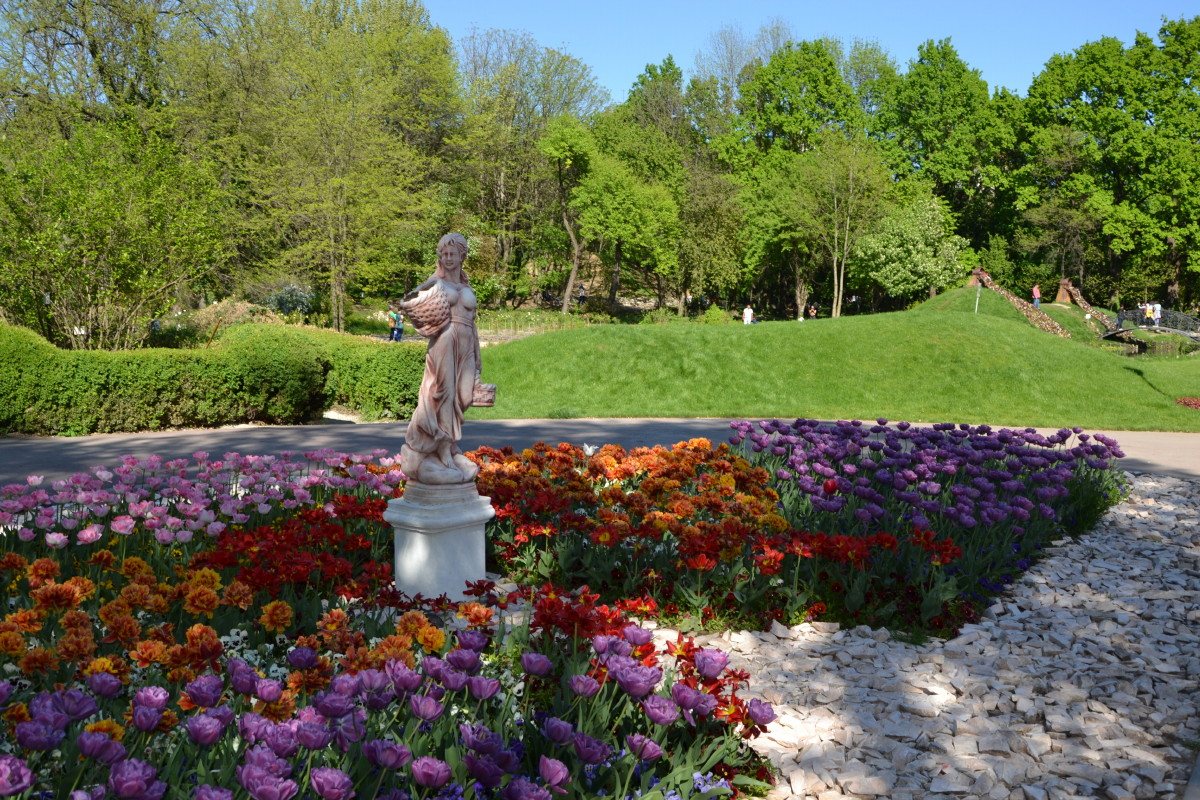
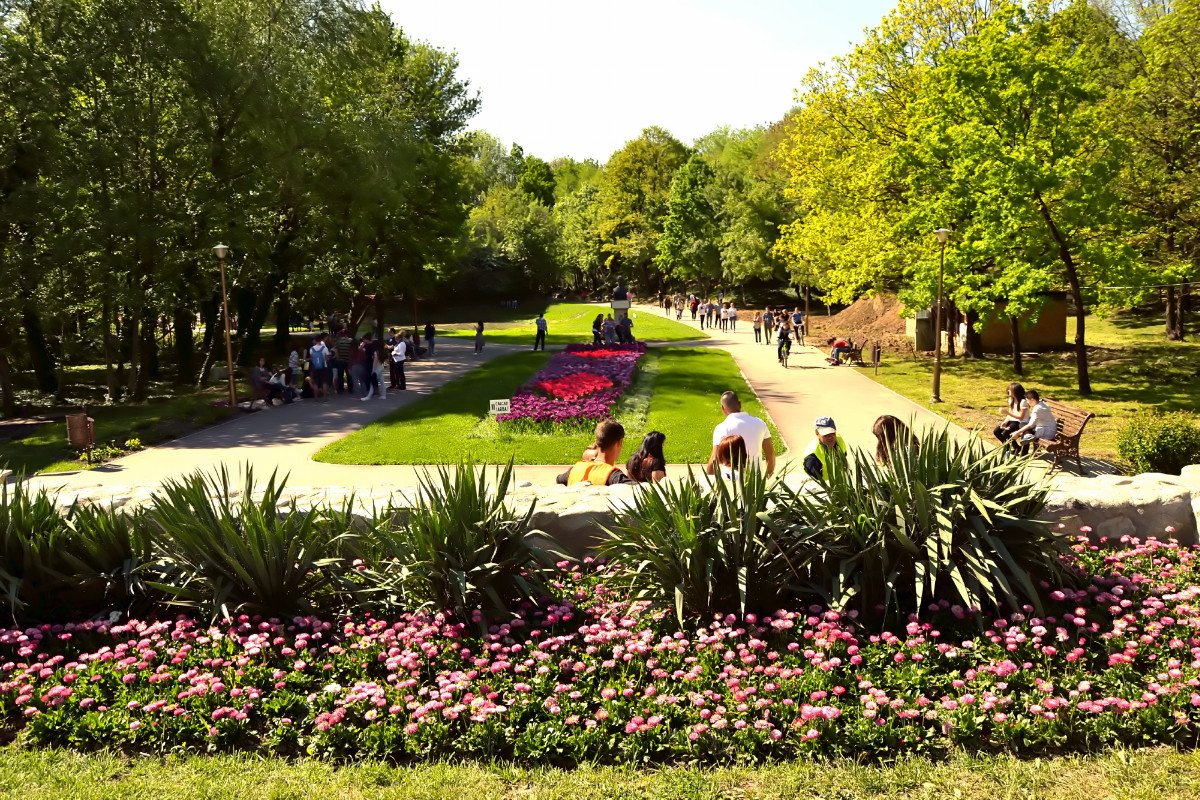
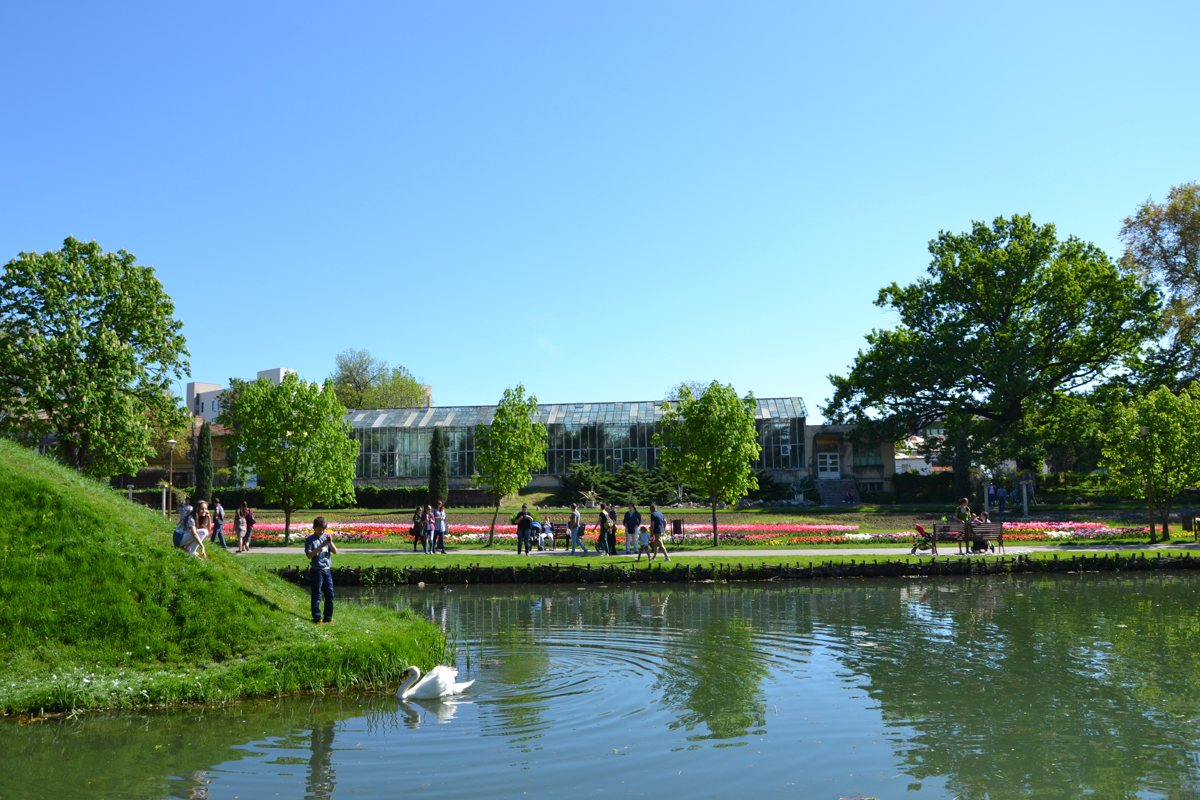
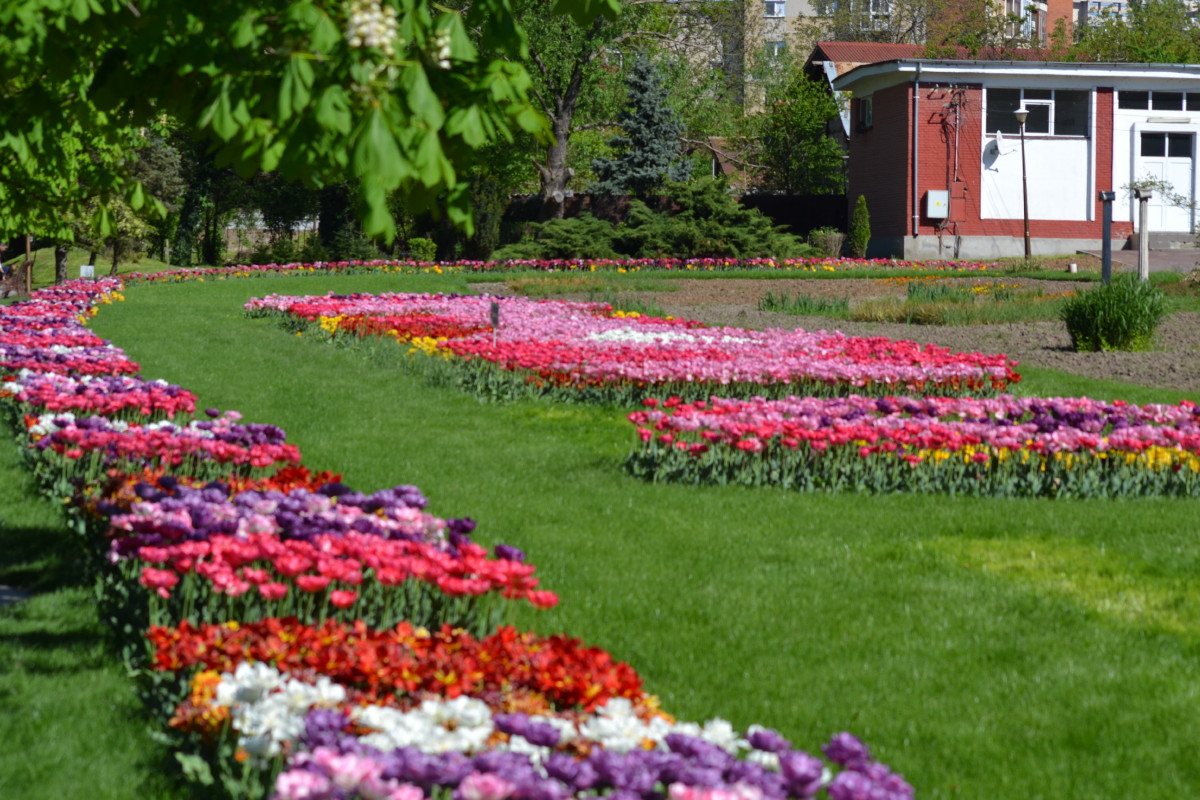
The Botanical Garden became once again a place for walks and relaxation for the people of Craiova after it was redesigned in the spring of 2016. In almost every corner you see young and old strolling or sitting on a bench in the sun, while others retreat to the shade. Most stop here and there to take photographs in the “new” botanical garden. It has become a favourite location for professional photo shoots too.
The garden was run by the University of Craiova until 2015, when it was taken over by Craiova City Hall, because the university did not have the funds to rehabilitate it. It was included in a broad local programme to redesign the city’s parks and gardens.
Text translated from the study produced in 2016 in the “Green School Education” project. The description of the sections shows the garden as it was at that date.
Documentary film: the Craiova Botanical Garden
The 16-minute film, made in the same project, presents the sections of the garden and the greenhouses. The narration is in Romanian.
Where it is
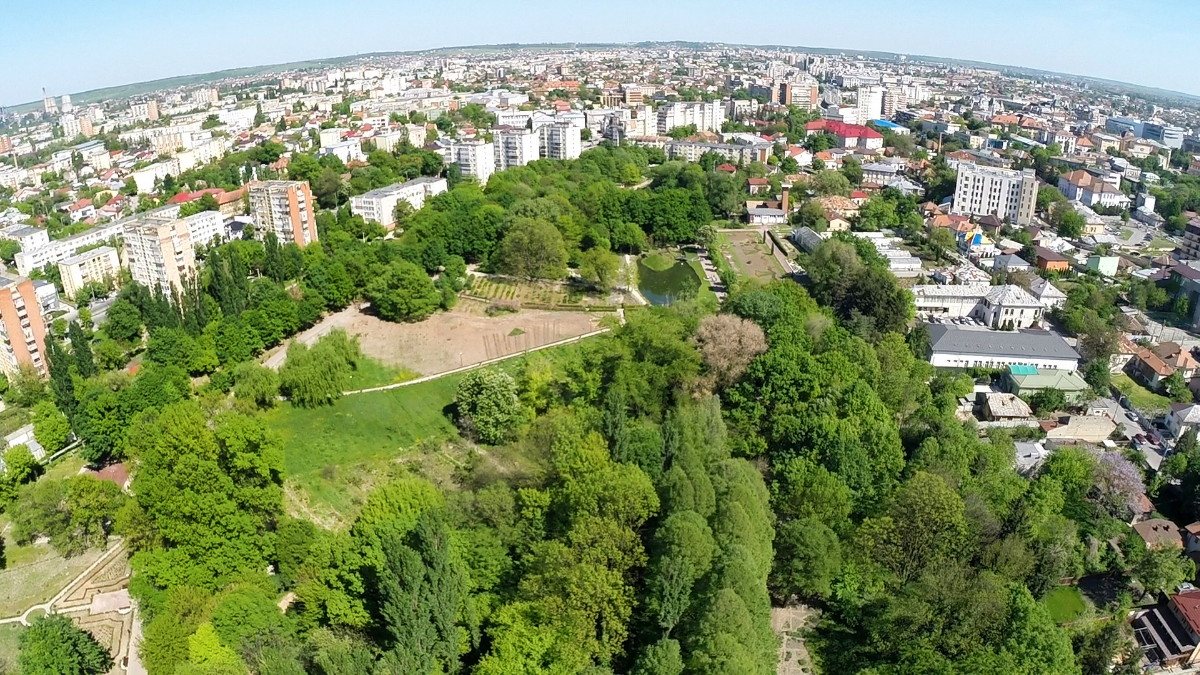
The Botanical Garden lies in the south-west of Craiova, between the streets Constantin Lecca – Obedeanu – Poporului – Renașterii – Calea Severinului (N. Titulescu) – Iancu Jianu, and covers about 17 hectares.
A short history
The Botanical Garden of Craiova was founded in 1952 on the initiative and under the guidance of Professor Alexandru Buia, who believed that quality higher education in agronomy or horticulture could not exist without a university botanical garden. It is the fourth university botanical garden in Romania, after those in Bucharest, Cluj and Iași. The French landscape architect E. Redont (who also designed Romanescu Park) had conceived it in the first years of the last century, but it was created much later, by expropriating the land around the Jianu stream.
By a decision of 29 August 1952, the land of the former “7 Noiembrie – Fântâna Jianu” park was assigned to the Craiova Agronomic Institute for the Botanical Garden.
The purpose was to serve as a teaching resource for students of the faculties of agronomy and horticulture of the Craiova Agronomic Institute (1948), to broaden the research base of the teaching staff, and to be a place where visitors could discover the great variety of the plant world.
In March 2002, on the 50th anniversary, the Senate of the University of Craiova decided, as a posthumous tribute, to name the garden after Professor Alexandru Buia.
The “Al. Buia” Botanical Garden is known nationally and internationally: since 1974 it has been a member of the International Association of Botanic Gardens (IABG), and since 2001 of the Association of Botanical Gardens of Romania (AGBR).
The sections of the garden
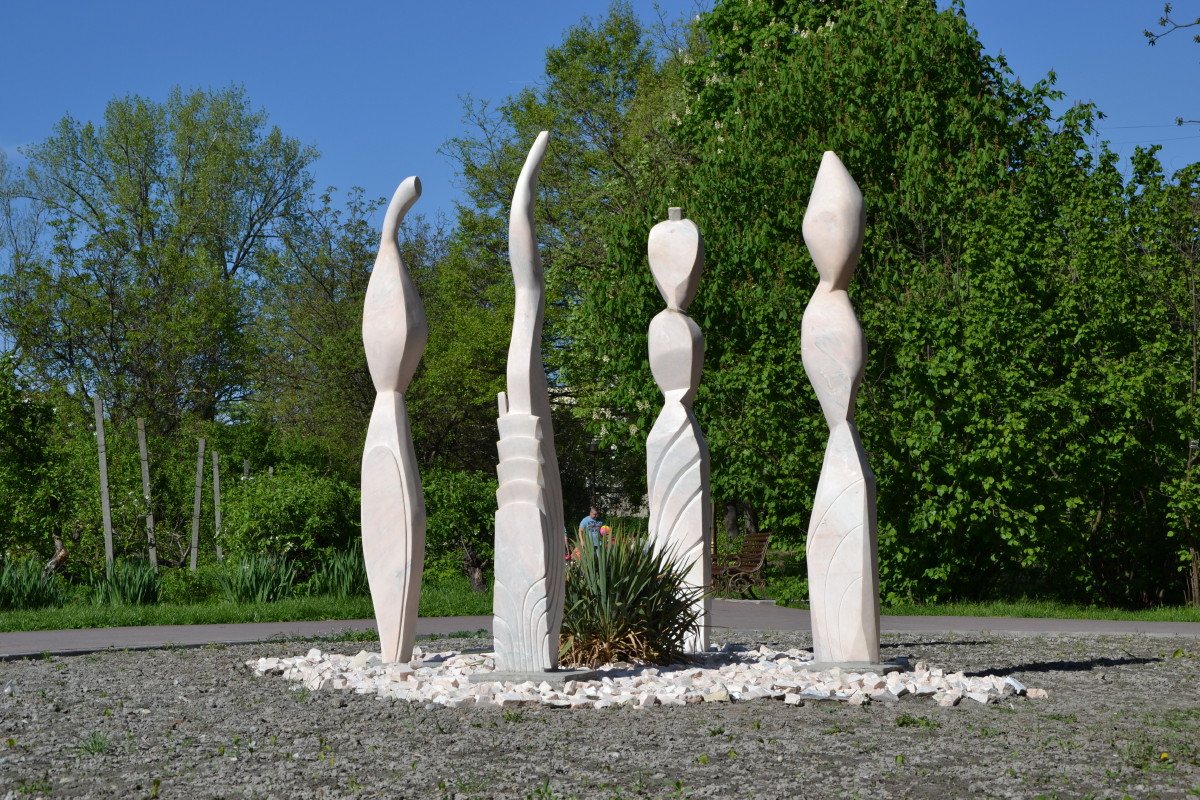
The Craiova Botanical Garden is organised, like the great university botanical gardens of the world, in sections, among them Plant Systematics (the System) and Floristic Provinces of the Globe (Flora of the Globe).
Through its vast and diverse collections, the garden holds living biological material for study and for fundamental and applied research. Suitable ecological conditions have been created for species from different geographical regions of the Earth.
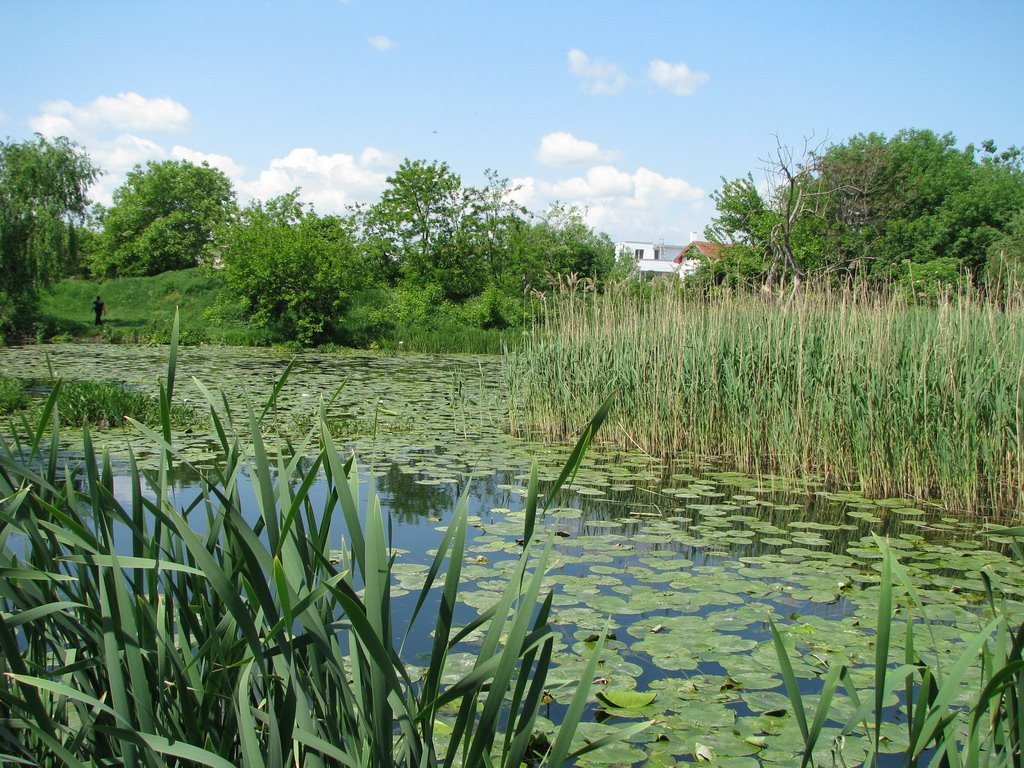
The garden is crossed from east to west by a stream, which made a better layout of the land possible. Three lakes were created, with a total area of about 0.3 ha. Species characteristic of the sections Phytogeography of Oltenia, Systematics and Floristic Provinces of the Globe were planted here.
The Ornamental section lies in the flat part of the garden and starts at the visitors’ entrance on Iancu Jianu Street. It contains a rich and varied collection of plants that immediately catches the eye.
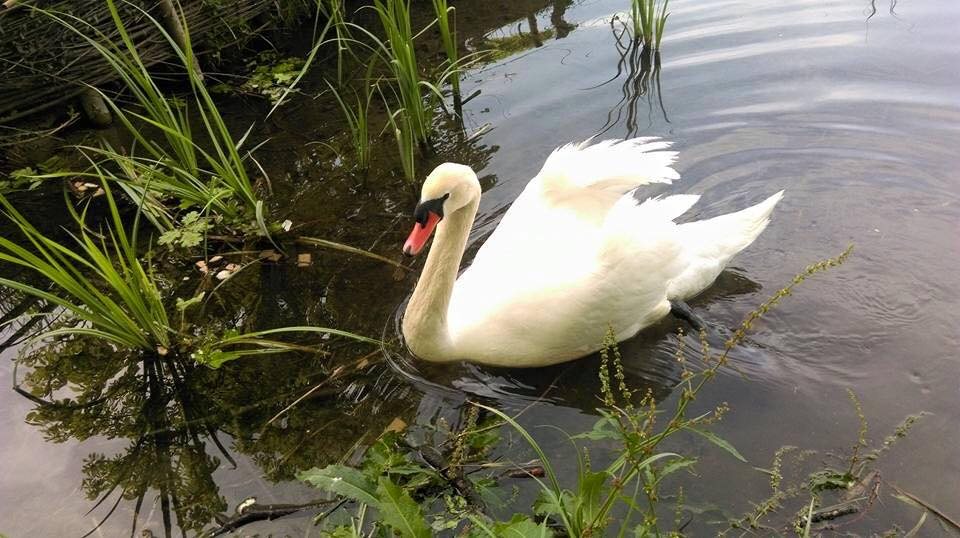
The Plant Systematics section is in the central part of the garden. It includes the lake, home to aquatic plants and to various species of birds. It is organised according to the theoretical classification of the whole plant kingdom; plants are grouped on scientific criteria, following evolution from lower to higher forms. Here you can see ferns, trees and shrubs such as ginkgo and cypress, and woody and herbaceous plants, annual and perennial.
In the sections Floristic Provinces of the Globe and Floristic Provinces of Romania, the specific relief was created by earth mounds between 1.5 and 30 m high, which also increased the area of the garden.
The Floristic Provinces of Romania section is in the north, north-east and east of the garden. To create conditions as close as possible to the ecological needs of species from the different phytogeographical regions of Romania, large earthworks shaped a relief with heights between 1.5 m and 30 m above the water level of the lakes.
The Floristic Provinces of the Globe section is in the south-west of the garden and is divided into provinces: Mediterranean, Caucasian, Central Asian, South-East Asian and North American.
The Cultivated Plants section is in the north-west and has six parts: field crops, vegetables, trees, shrubs and medicinal plants, vines, and fruit trees.
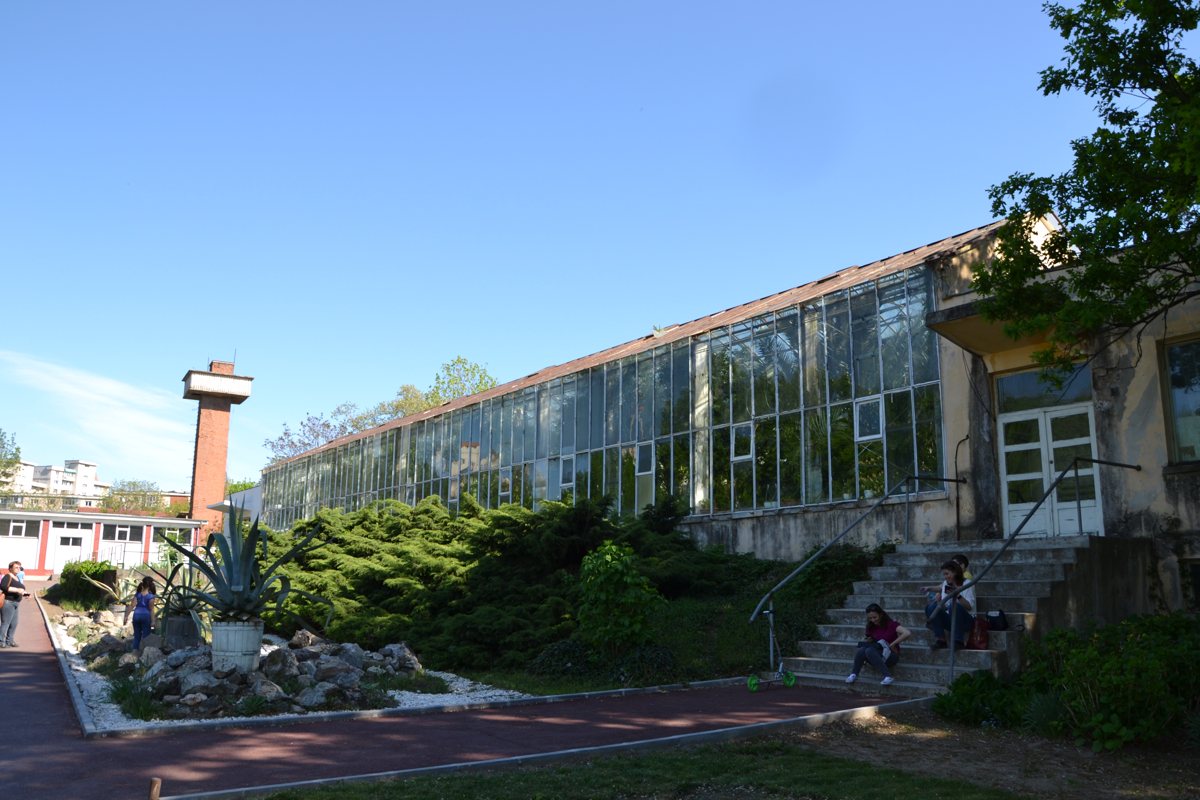
The Greenhouses section is near the administrative building. It was set up a few years after the garden, between 1962 and 1964. At the date of the study (2016), only this section had remained under the exclusive administration of the University of Craiova.
The greenhouses cover 750 sq m, but only part of them can be visited; the rest is study space for students. The section has four compartments – the corridor greenhouse, the succulents greenhouse, the tropical and subtropical plants greenhouse and the propagation greenhouse – with a total of 600 species of plants, trees and shrubs.
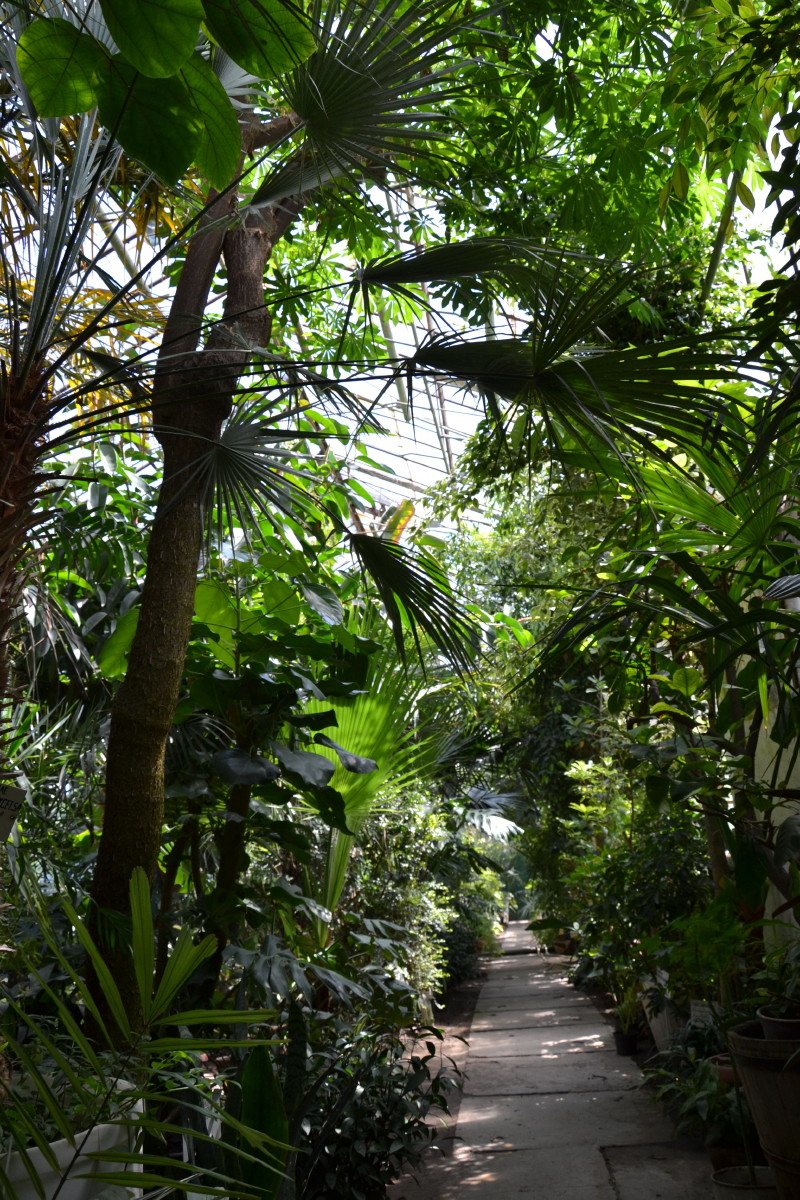
The corridor greenhouse holds the largest trees: palms, ficus, banana plants and others, which are also what children like most. You can see plants and trees from all corners of the world, some easily recognised, others unknown. Each species has a label with its scientific name, common name and family.
The Nursery and Rose Garden section is in the west and south-west of the garden. The nursery grows the plants needed for planting in the garden, according to the season.
The Museum is in the hall of the administrative building and contains samples of seeds and fruits, charts, graphs, diplomas and the catalogues published by the garden since its foundation.
The seed catalogue “Index Seminum” is printed every year and sent to more than 300 similar institutions around the world, making seed exchanges possible and enriching the plant collections.
The garden also has a Herbarium. It began with about 10,000 sheets issued by Flora Romaniae Exsiccata (FRE); Professor Buia’s herbarium was added later, with 20,000 sheets of plants collected from all the provinces of Romania.
To these two herbaria are added many sheets of pressed plants collected during students’ field trips, as well as species present in the sections of the garden.
The herbarium has great scientific value. It is permanently available to teachers, researchers and students, and to anyone interested in botany.
Visitor information
- Admission: free
- Visitors’ entrance: from Iancu Jianu Street, next to the Jianu Fountain
- Management: the garden was taken over by Craiova City Hall from the University of Craiova and reopened after rehabilitation in 2016; it is listed among the parks looked after by ECO URBIS Craiova. The greenhouses remained with the University of Craiova.
- ECO URBIS Craiova contact: +40 251 411 214
- Website: ecourbiscraiova.ro
Information checked in November 2026. Opening hours are not published; confirm before your visit, especially for the greenhouses.
Download the study
The “Alexandru Buia” Botanical Garden in Craiova – study (PDF in Romanian, 14 pages, 6.4 MB), with all the photographs. The practical information in the study dates from 2016.
About the project
The film was made by Asociația Mereu pentru Europa, and the study was written in the same project: “Green School Education as a Promotion of Sustainable Use of Cultural and Natural Heritage and Resources”, code 15.2.1.001 (February 2016 – August 2017), co-financed by the European Union through the European Regional Development Fund under the Interreg V-A Romania–Bulgaria Programme. The content of this material does not necessarily represent the official position of the European Union.