

Craiova Art Museum, Jean Mihail Palace – the palace, the collections and a documentary film
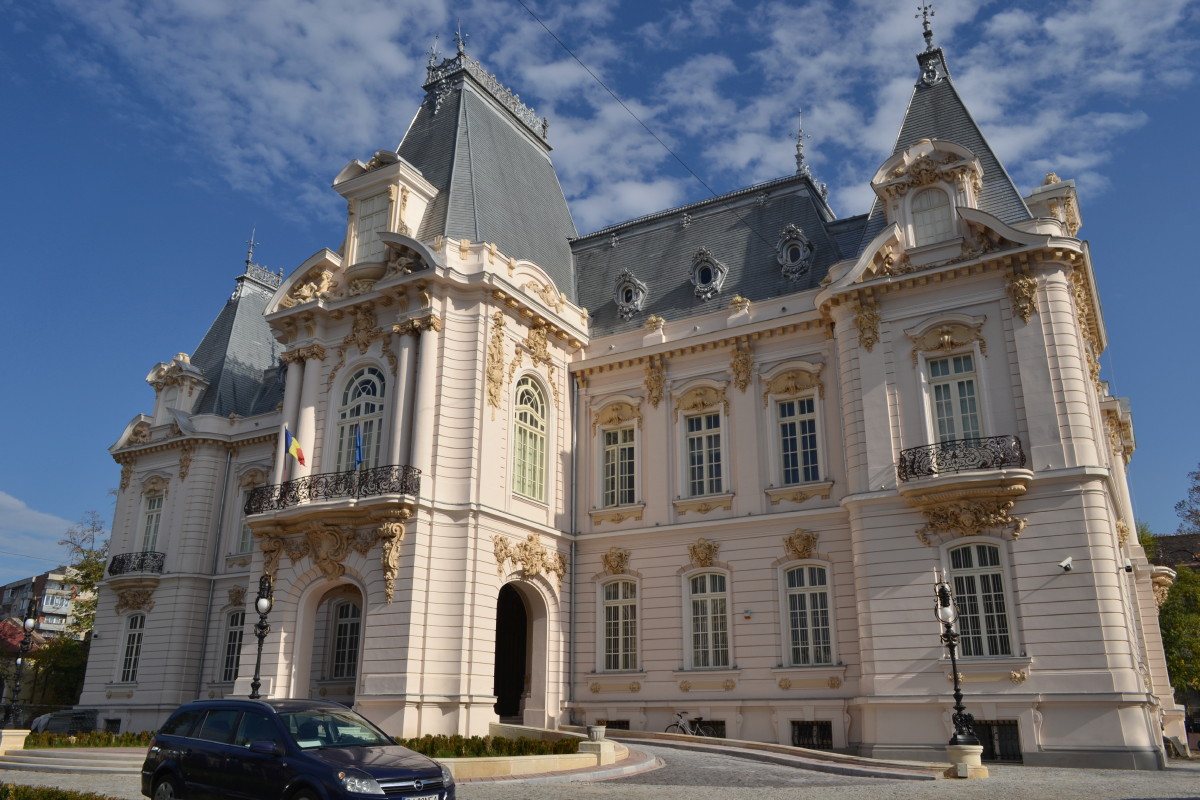
The Craiova Art Museum is housed in the most beautiful building in Craiova and indeed in Oltenia. This architectural jewel was built between 1900 and 1907 to plans by the French architect Paul Gottereau, at the request of Constantin (Dini) Mihail (1837–1908), one of the richest men in Romania at the time.
Text translated from the study produced in 2016 in the “Green School Education” project. The description of the rooms shows the museum as it was at that date.
Documentary film: Craiova Art Museum
The 16-minute film, made in the same project, presents the palace and the museum’s collections. The narration is in Romanian.
The palace and the collections
More than a hundred years after it was built, the Jean Mihail Palace remains not only one of the most sumptuous buildings in the centre of Craiova but also one of the most important monuments of early 20th-century civil architecture in Romania. In a privileged location, surrounded by a small ornamental park in the French style and somewhat crowded by the blocks of flats that appeared in the second half of the 1950s, the palace has the appeal and distinction of a finely crafted jewel. It arouses the admiration and curiosity of passers-by, who often stop and recall the story of the roof made of gold coins – only a legend, of course, which has fixed in local memory the figure of Constantin Mihail, whose impressive fortune might have made even such a fantasy possible.
As soon as you pass the gate and enter the garden, everything else seems to disappear. You are carried into a storybook world of knights and ladies. You expect a carriage to arrive, with women in evening gowns and men dressed in the latest fashion of the last century. Everything around stirs the imagination: luxury and elegance.
The plan of the building is quite close to one of the châteaux of the Loire Valley in France, Château de Cheverny, built in the classical style of the 17th century and recognised as an example of balance and elegance.
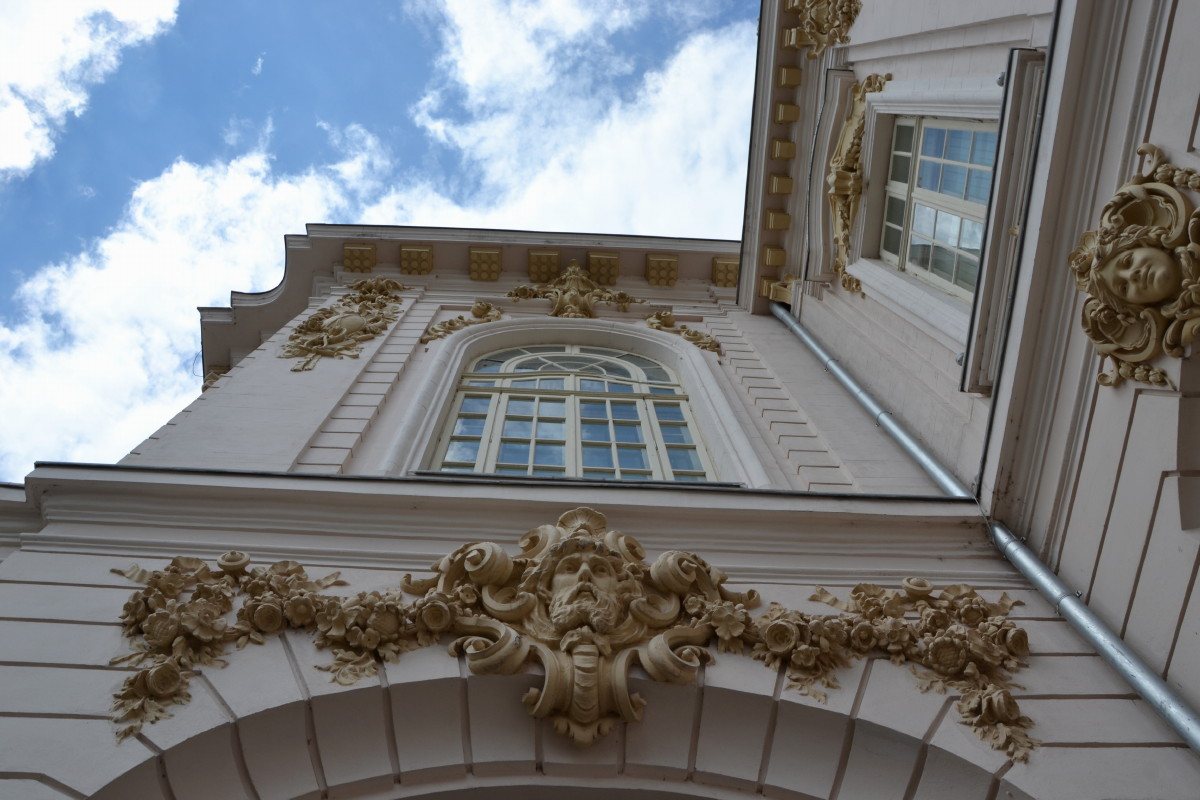
While the exterior stands out for the rigour of its façade ornaments, window surrounds and the ironwork of the balconies, the interior was meant to be truly imposing. In keeping with residences of this kind, the palace has a hall of honour, reception rooms, a music room, dining rooms and all the other spaces needed for the comfort and, above all, the standing of a family of such rank. The interior reflects everything a luxurious setting meant: stairs of Carrara marble, Murano crystal chandeliers, Venetian mirrors, caryatids, columns with richly ornamented capitals and gilded stucco.
The walls were covered in Lyon silk and some of the ceilings were painted. The whole interior was designed to benefit from very good natural light, with wide windows and skylights that bring out the finest details at any time of day. The teams of decorators were foreign craftsmen, mainly Italians, and the architect supervising the works was the Italian Constantino Cichi.
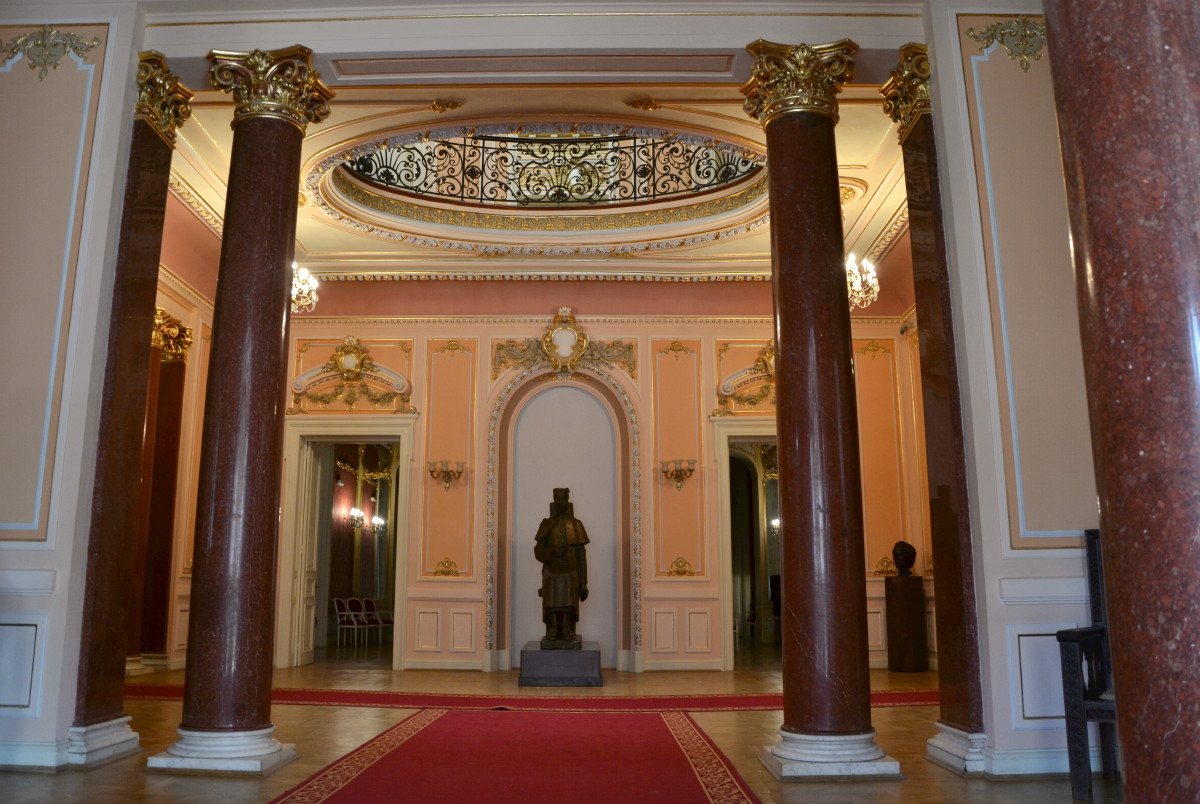
The hall of honour is impressive and opens generously onto the main rooms of the ground floor. The rooms to the left of the entrance hold the most valuable pieces of the museum’s collection. The Brâncuși Cabinet contains six works by the famous sculptor Constantin Brâncuși: Vitellius, Head of a Girl (Pride), Head of a Boy, The Thigh, Mademoiselle Pogany and The Kiss (considered by art historians the first modern sculpture in the world).
Some of Brâncuși’s works – Head of a Boy, Head of a Girl and The Kiss – from the collection of the lawyer Victor N. Popp, the artist’s friend from youth and his most important Romanian collector, were first exhibited between 24 and 31 October 1943, when the Jean Mihail Palace was opened to the public for the first time. “Oltenia Week“, under the patronage of the “King Carol I” Royal Cultural Foundation, was the most important exhibition organised in the region up to that date. Marshal Ion Antonescu attended, along with many political leaders. Conceived on the model of the universal exhibitions, it brought together everything from agricultural and industrial products to works of art. One could say that this was the beginning, but the palace truly became a museum only in 1954.
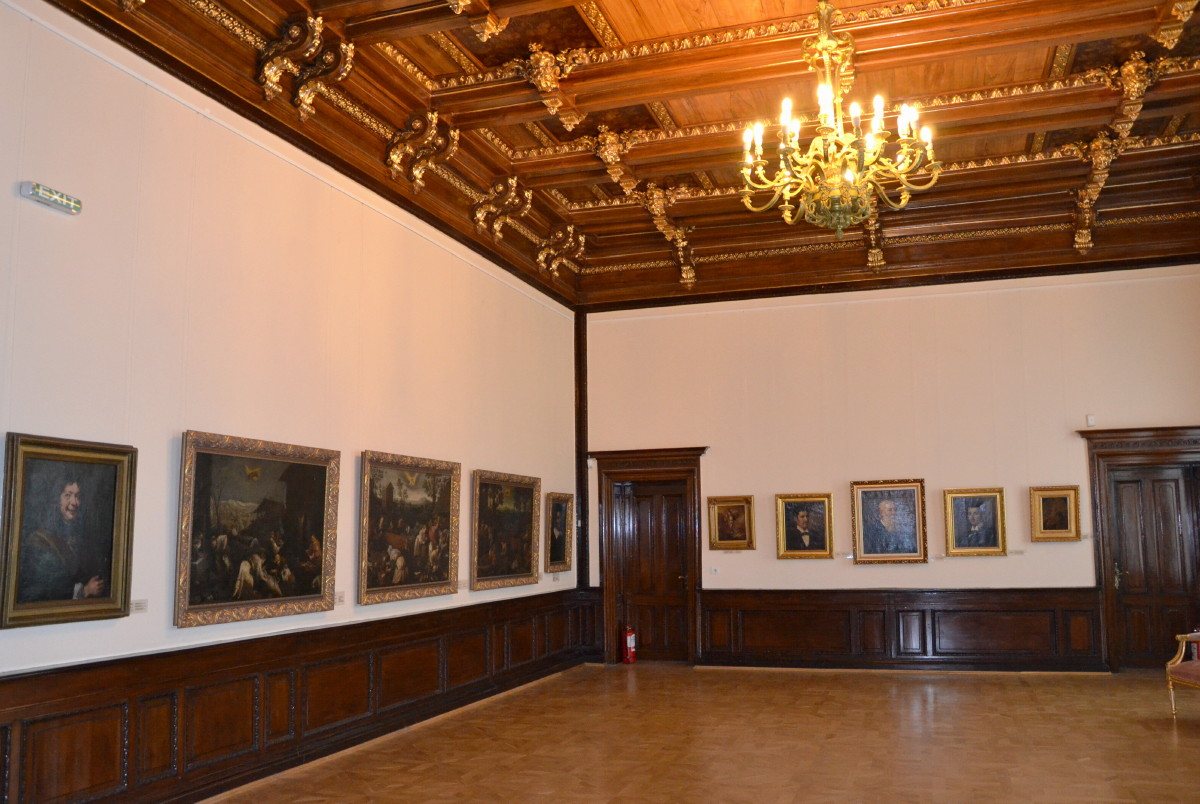
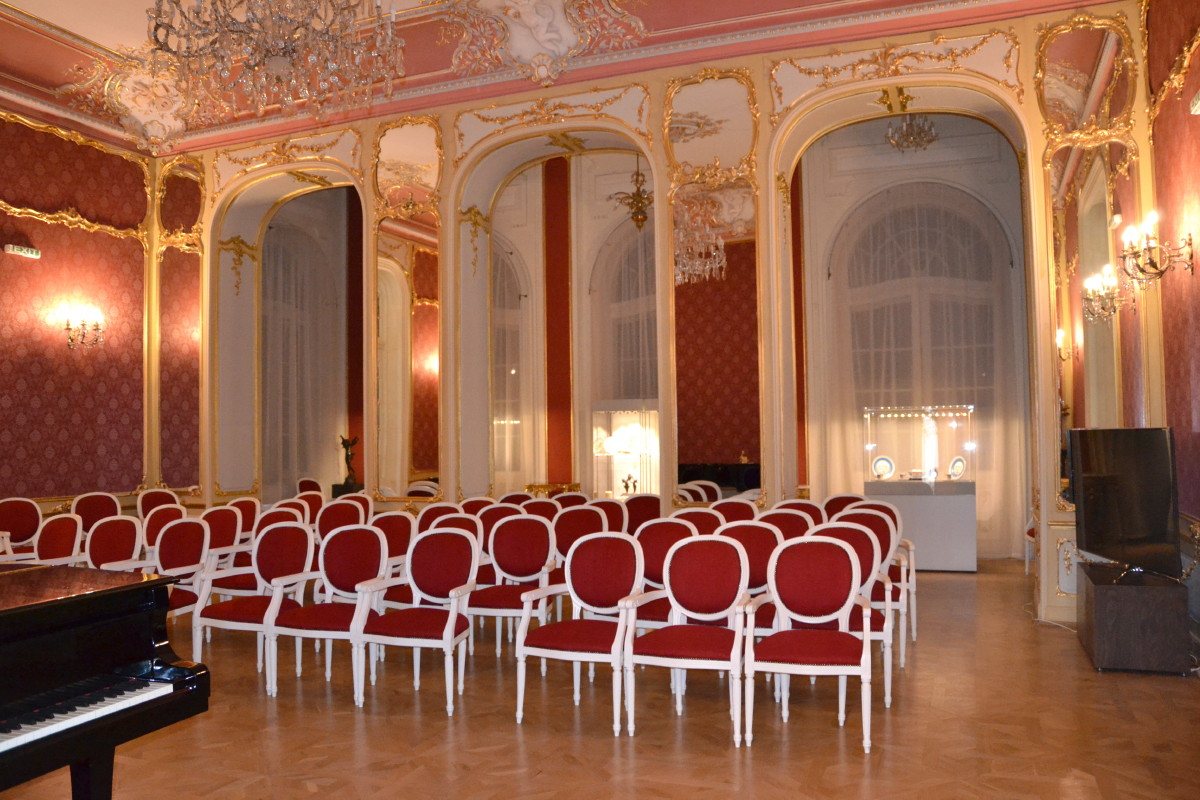
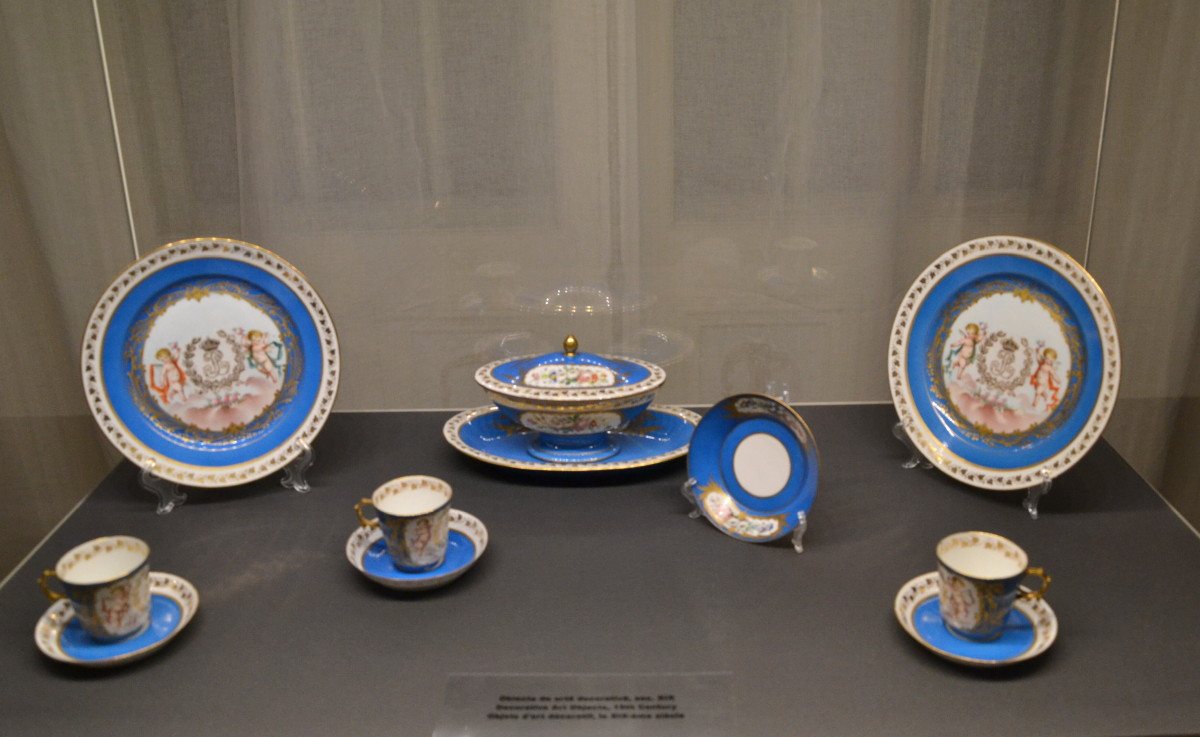
The former dining room of the palace is remarkable, with a ceiling made of stucco so as to imitate wood perfectly, on the model established in the 19th century at Versailles. Next to it is the silk room, probably a former music room, judging by its acoustics and the decorative cartouches showing musical instruments. This superb room has been given back its original use thanks to the Oltenia Philharmonic of Craiova, which holds weekly mini-concerts here. The room also contains several 19th-century decorative art objects.
The other ground-floor rooms are used for temporary exhibitions. The palace has 29 rooms (plus outbuildings), of which the most spectacular and best known is undoubtedly the Hall of Mirrors. On the upper floor, opening onto the rotunda above the hall of honour and the main skylight, and onto the two adjacent rooms, the Hall of Mirrors was the main reception room. Large enough to be used as a ballroom, it stands out even in the refined atmosphere of the palace. Here you can admire the famous Venetian mirrors, the richly ornamented gilded decoration and the two imposing Murano crystal chandeliers.
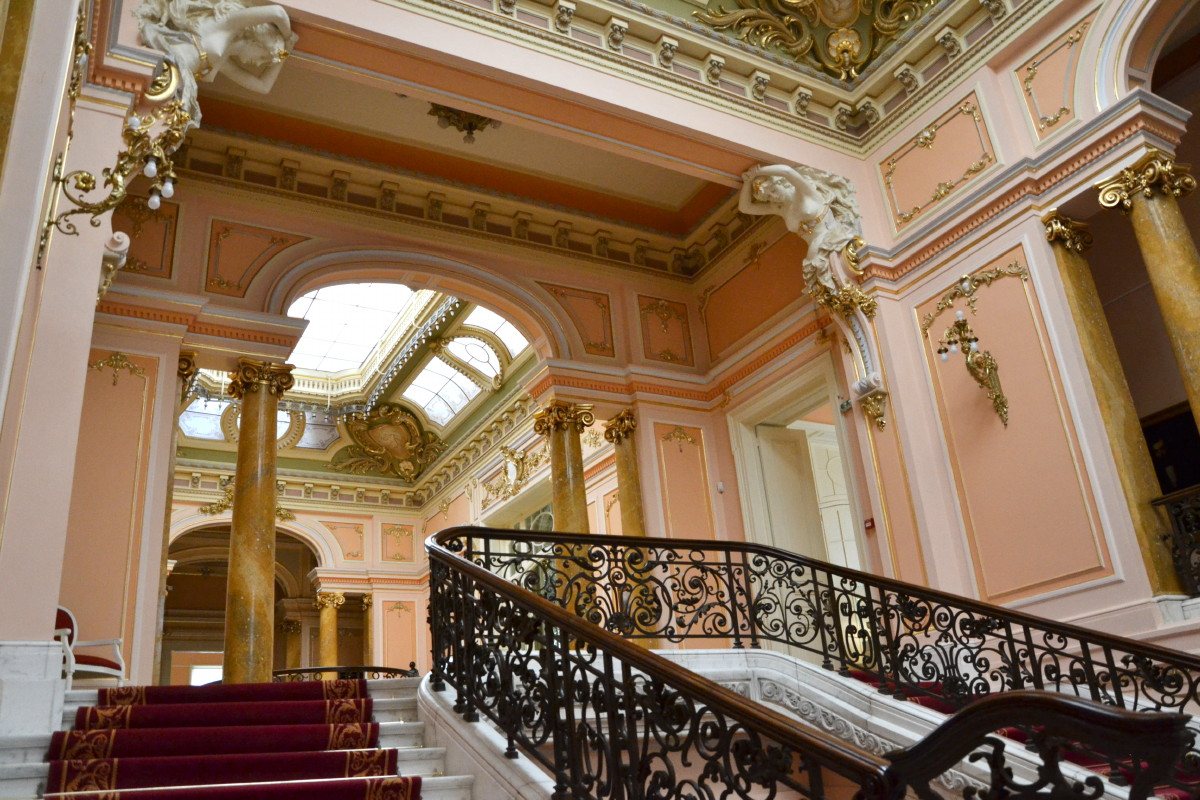
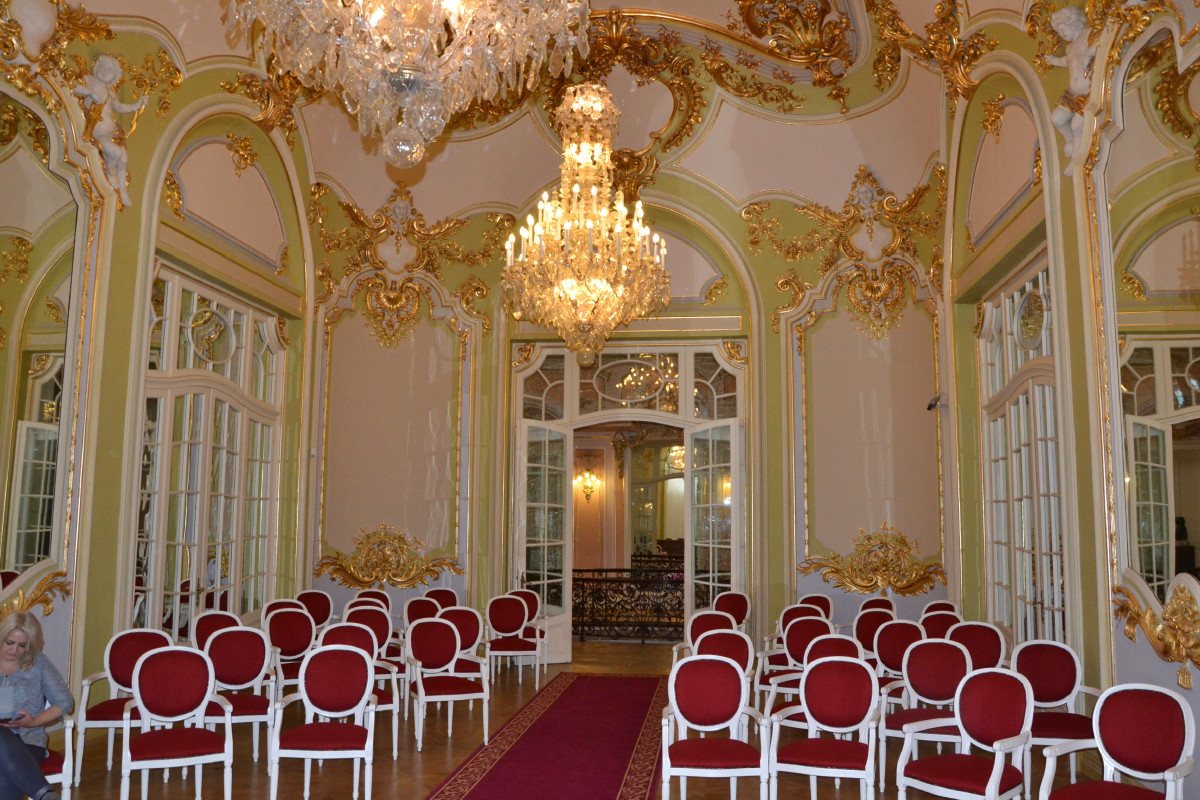
The furniture and art objects that completed the cosmopolitan look of the palace could largely be bought abroad, since Mihail had relatives in Vienna who owned, among other things, an antiques shop.
The palace was roofed with slate and fitted from the start with electricity, central heating and so on. Valued for its artistic quality, it was listed as early as 1947 as one of the most important monuments of civil architecture of the early 20th century.
In 1954, following the decision to set up an art collection by transferring the building from the Ministry of the Interior to the City People’s Council, the palace became the seat of the Craiova Art Museum. After years of hosting distinguished guests and being at the centre of political events, the former home of the Mihail family became a museum. Part of the “Alexandru and Aristia Aman” Picture Gallery was moved here; since 1908 it had been the city’s first museum (opened in the house of Grigore and Elena Lăceanu, now the “Alexandru and Aristia Aman” County Library). Besides a library, the gallery included objects of historical value, furniture and paintings of the Dutch, Flemish, Italian and French schools (mostly 17th–19th century works), paintings and graphic works by Theodor Aman, and Romanian and foreign decorative art.
The collection grew in the interwar period through purchases made by the city hall and through the donations of Nicolae Romanescu and Jean Mihail (European painting), Cornetti, Glogoveanu and others, which considerably enriched it. Sheltered during the Second World War in the cellars of the Prefecture, the gallery’s holdings (except books, periodicals and manuscripts) were taken over by the Oltenia Museum in 1950. Only from 1954 did the paintings, decorative art and several pieces of art furniture form the core of an independent art museum.
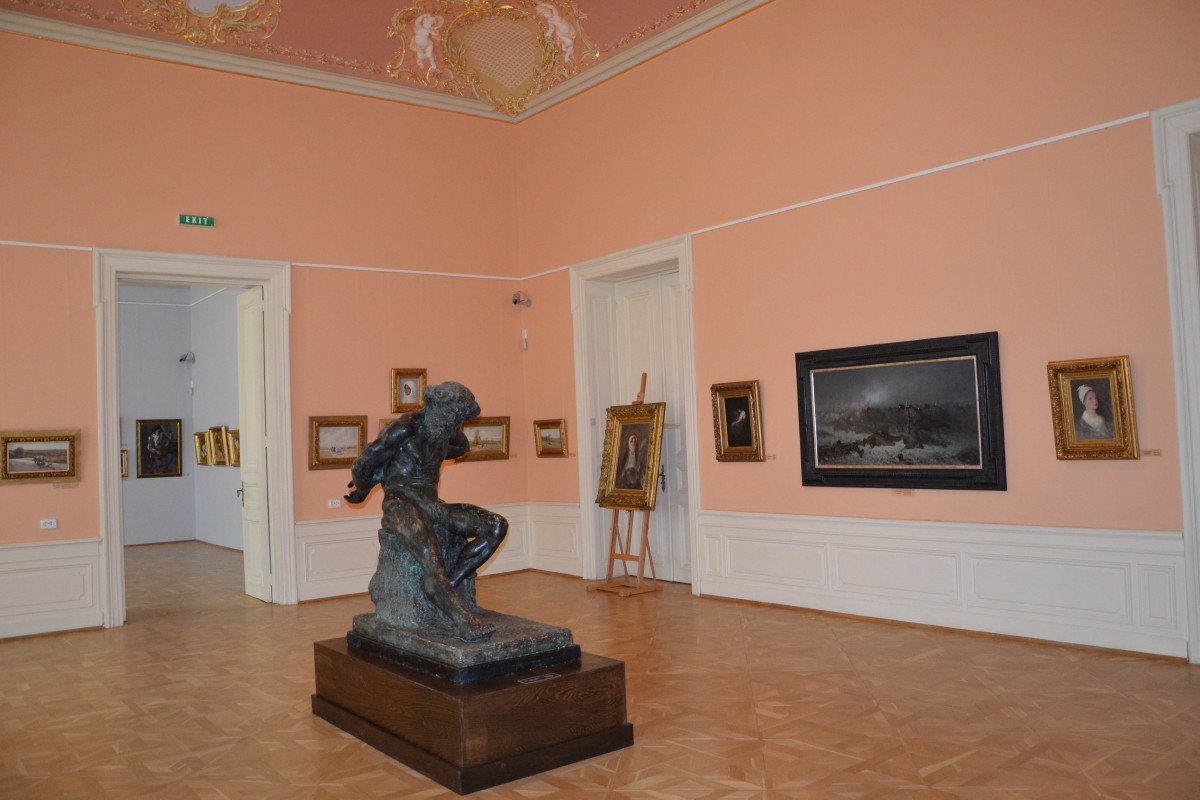
The museum’s holdings continued to grow after the war, through major transfers from the National Museum of Art of Romania and central state funds, and through purchases, reaching more than 8,000 pieces of European and Romanian art at the date of the study. The Romanian art collection is the most important part and includes the leading names in the history of Romanian art: Theodor Aman, Nicolae Grigorescu, Nicolae Tonitza, Ștefan Luchian, Gheorghe Petrașcu, Theodor Pallady, Eustațiu Stoenescu, Ion Țuculescu, Gheorghe Anghel, Dimitrie Paciurea and others.
A short history
Several events worth recalling took place in the palace over the years. In May 1913 King Carol I and his family were hosted here. In July 1913, during the Second Balkan War, King Carol I again stayed here briefly, and in 1915 King Ferdinand. The last descendant of the family, Jean Mihail, was an important figure in Romanian society and close to the Royal House.
During the First World War, when part of Romania was temporarily occupied by the Central Powers, the palace was the headquarters of the German Command for Oltenia. At the end of the summer of 1940 the Romanian–Bulgarian negotiations were held in the palace, following which, on 7 September, Romania ceded Southern Dobruja (the Cadrilater) to Bulgaria.
From September 1944 the palace was the headquarters of the Soviet 53rd Army. In the autumn of that year Josip Broz Tito lived here for five weeks, and in September 1944 the agreement between the National Committee for the Liberation of Yugoslavia and the Fatherland Front of Bulgaria was concluded here, ending the war between Yugoslavia and Bulgaria. From here Tito directed the operations for the liberation of Belgrade, successfully completed on 20 October 1944.
In 2009, a hundred years after its inauguration, the palace entered a complex process of consolidation and restoration, through a project generously supported by both European funds and the local authorities.
Visitor information
- Address: 15 Calea Unirii, Craiova
- Opening hours: Tuesday–Sunday, 10:00–17:00; closed on Mondays
- Phone: +40 251 412 342
- Website: muzeuldeartacraiova.ro
Information checked in November 2026. Opening hours and access conditions may change; confirm before your visit.
Download the study
Craiova Art Museum, Jean Mihail Palace – study (PDF in Romanian, 13 pages, 6 MB), with all the photographs. The practical information in the study dates from 2016.
About the project
The film was made by Asociația Mereu pentru Europa, and the study was written in the same project: “Green School Education as a Promotion of Sustainable Use of Cultural and Natural Heritage and Resources”, code 15.2.1.001 (February 2016 – August 2017), co-financed by the European Union through the European Regional Development Fund under the Interreg V-A Romania–Bulgaria Programme. The content of this material does not necessarily represent the official position of the European Union.