

“Nicolae Romanescu” Park, Craiova – history, sights and documentary film
One of the best-known and most popular leisure areas in Craiova is “Nicolae Romanescu” Park, regarded as one of the largest natural parks in Europe. It is a favourite place of recreation for the people of Craiova and for visitors: tourists who stop in the city go to see it, fall in love with the place and return whenever they can.
Text translated from the study produced in 2016 in the “Green School Education” project. The description shows the park as it was at that date.
Documentary film: “Nicolae Romanescu” Park
The 15-minute film, made in the same project, presents the park and its sights. The narration is in Romanian.
The park
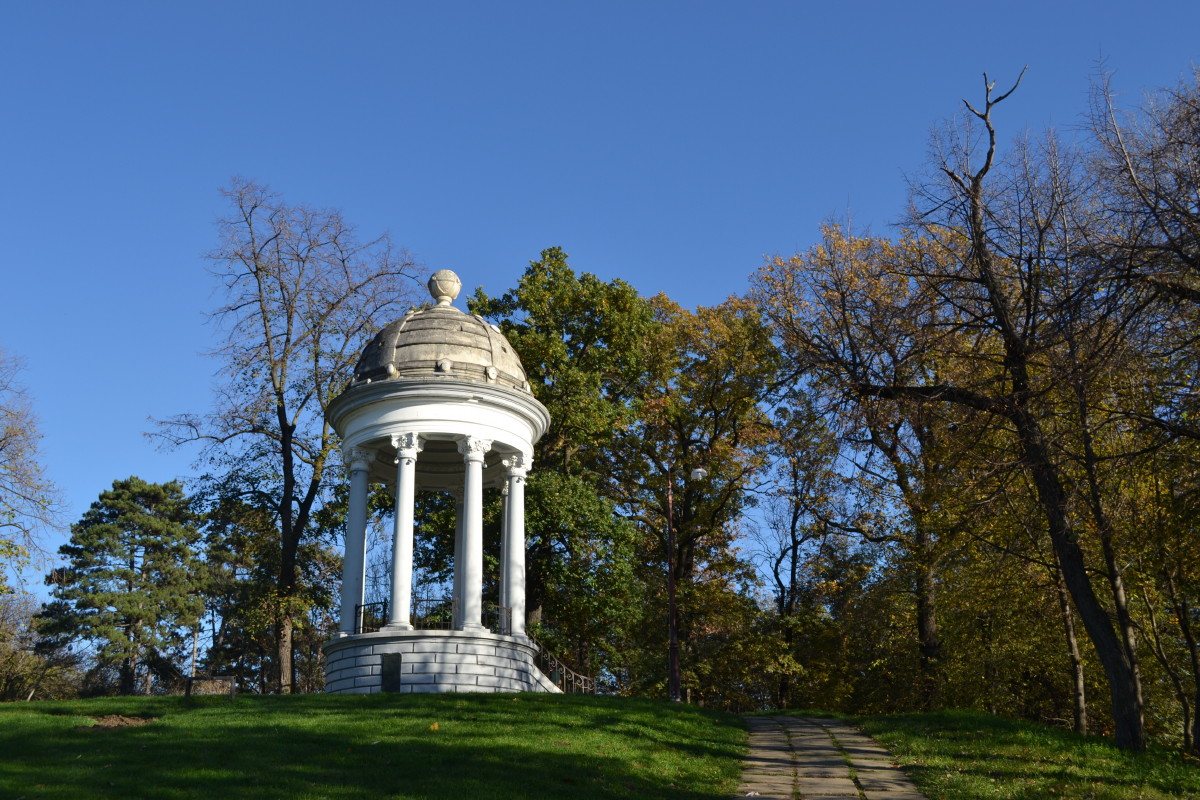
The park covers 90 hectares and was created from 1900 on the initiative of the then mayor of Craiova, Nicolae Romanescu. The land was bought from Prince Gheorghe Bibescu in 1900, construction began a year later under the French architect Édouard Redont, and the park was inaugurated on 29 September 1903.
The builders used methods that were bold for 1900: hundreds of trees of rare species were acclimatised, and structures such as the suspension bridge, the medieval castle and several small concrete bridges imitating tree bark were built. The centrepiece of the park is the four-hectare lake.
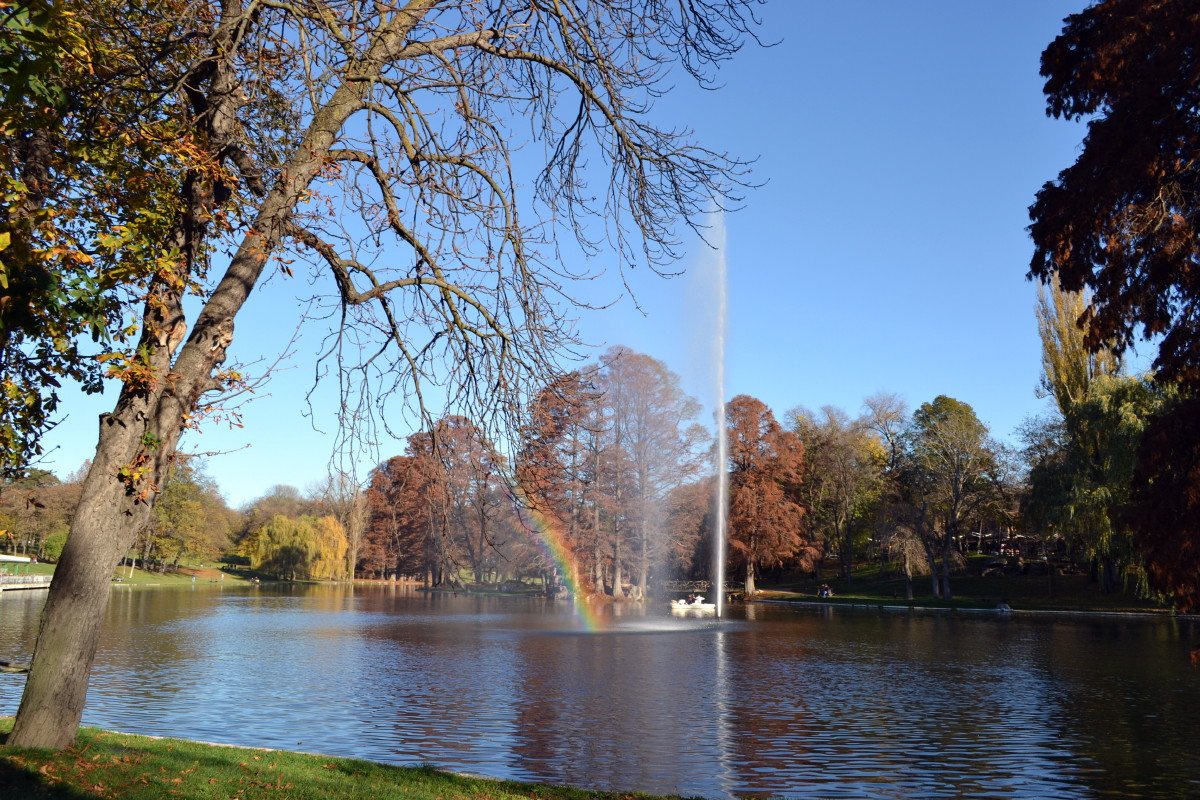
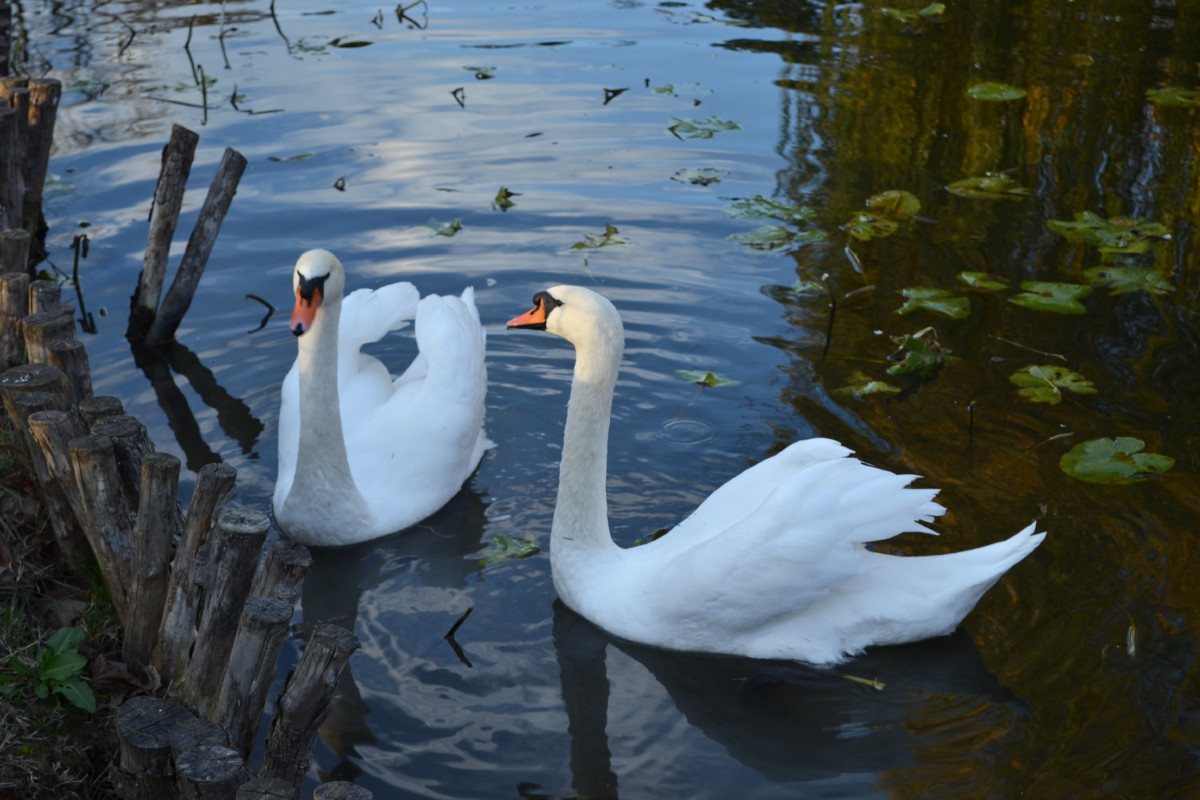
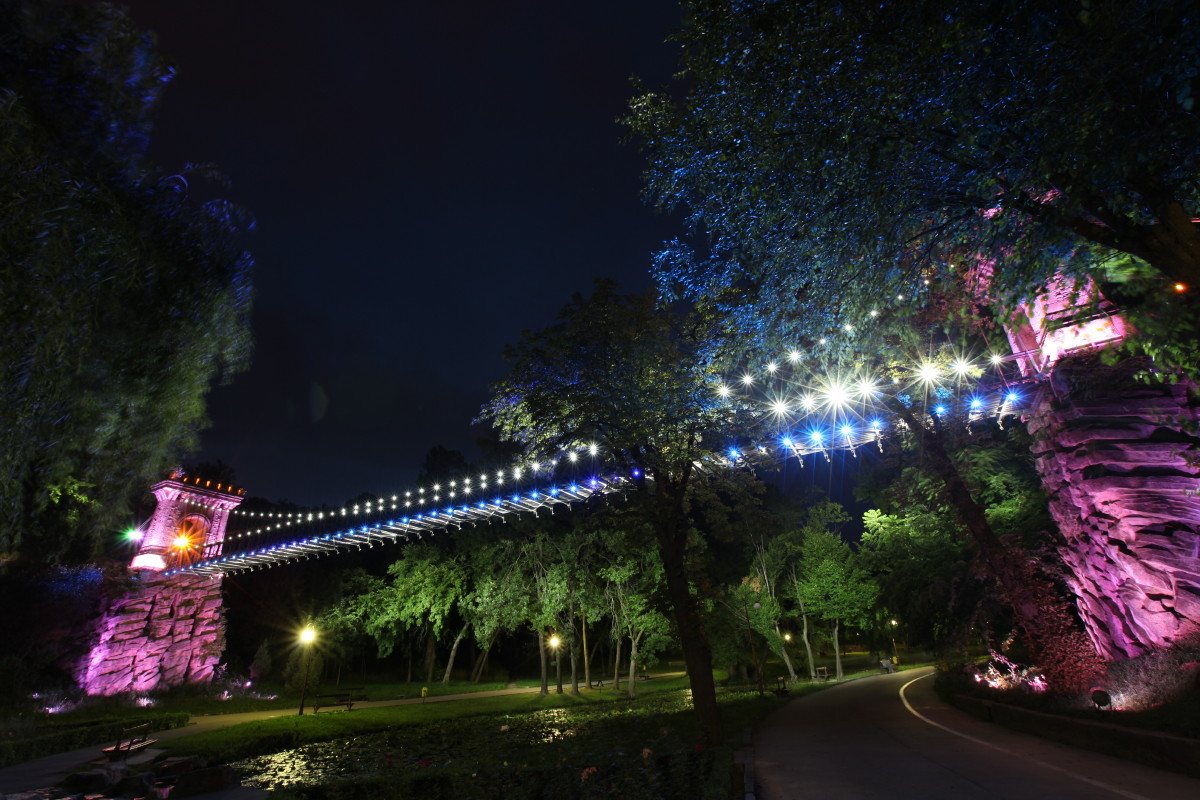
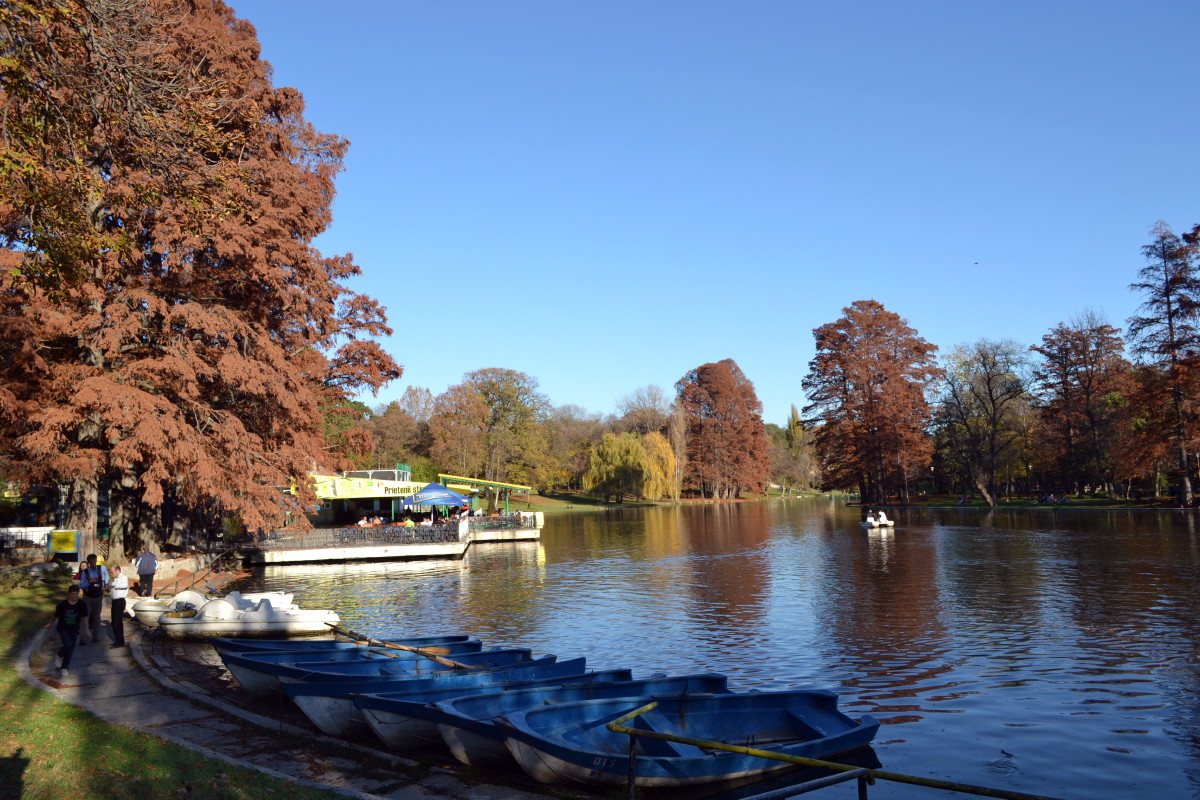
Romanescu Park was designed to include almost every form of relief. Starting from the main gate and walking along the paths, you first see its “plain”, then the green hills and the stream that flows gently through its heart. Following the water, broken by miniature waterfalls, you reach the lake, and the opening towards the light is superb. In the distance the suspension bridge stands against the green background, with a hill rising on either side. This is the “hill zone”. It is the best place to see the park in all its splendour, from a bench on the lake shore, from a gazebo or from the terrace of the boathouse.
The route then continues over the suspension bridge and around the enchanted castle. Here the “mountain zone” begins. The stream under the bridge flows between two wooded slopes, crossed here and there by small stone bridges.
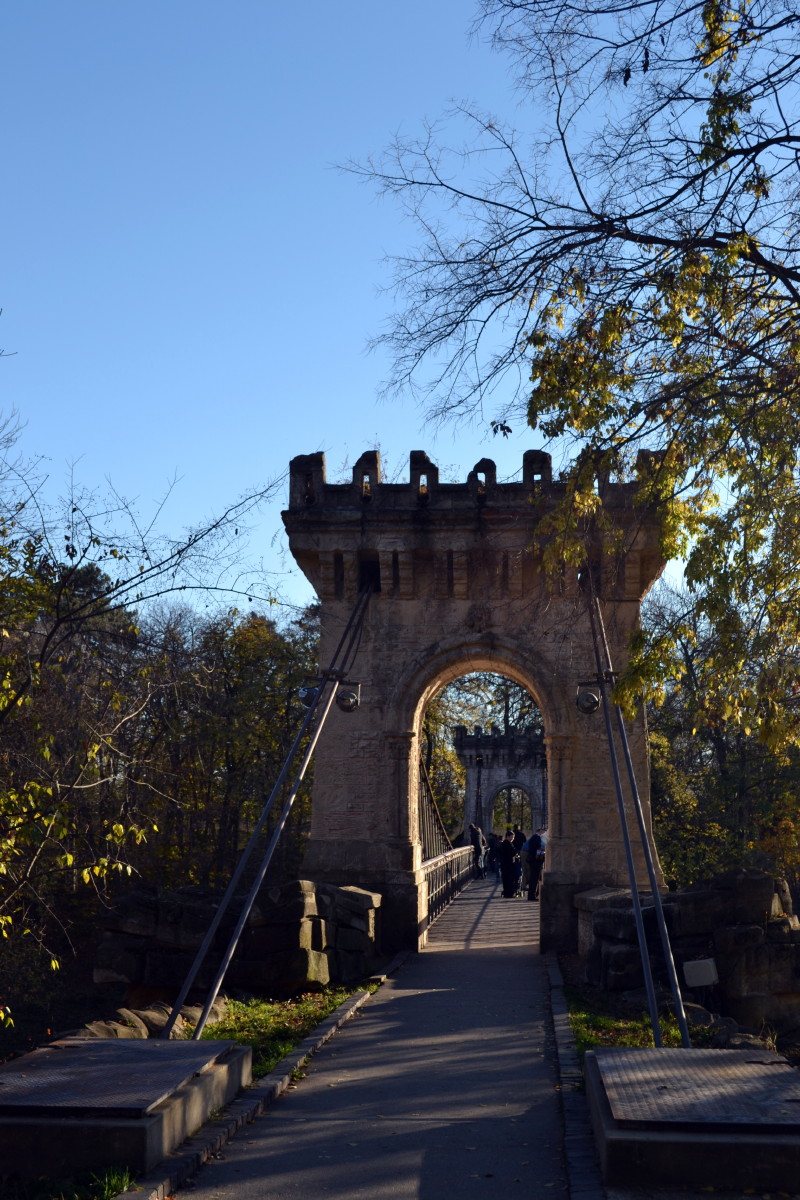
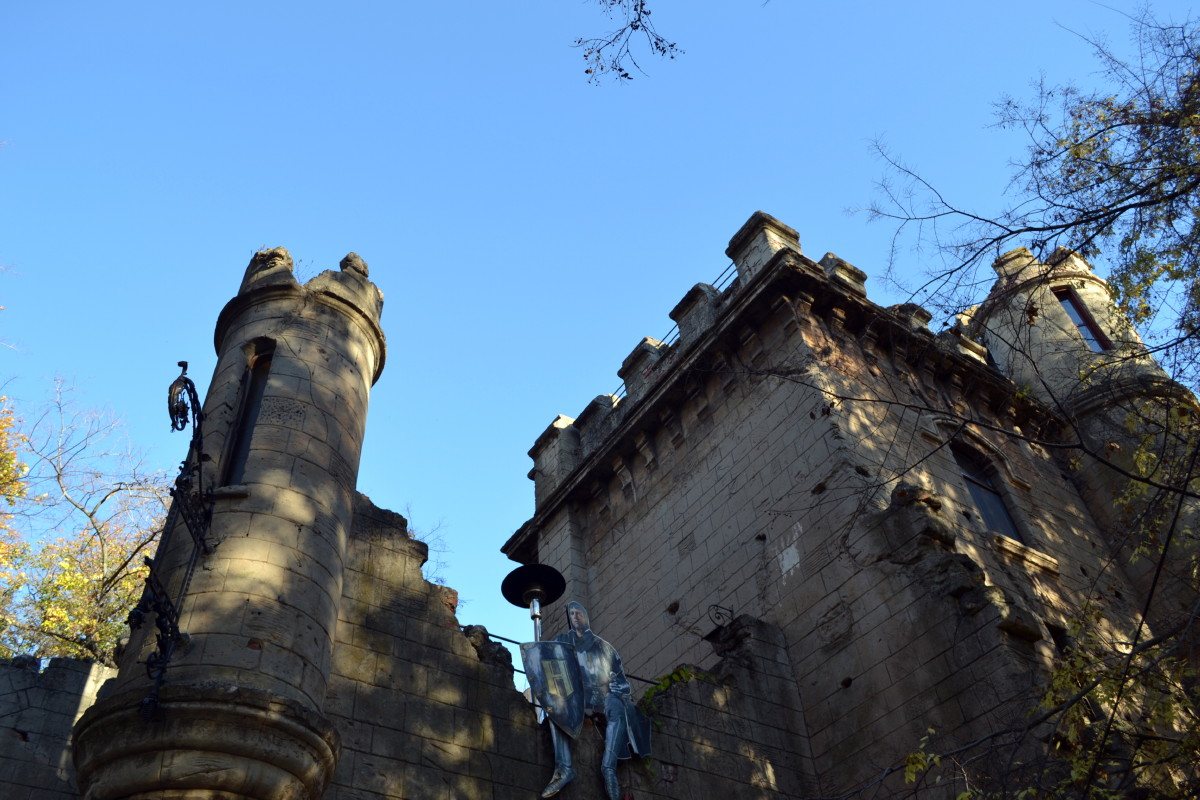
The enchanted castle was imagined by Redont as a casing for the huge water tanks used to irrigate the park, at a time when everything was designed to look perfect a hundred years later. What is more, it was built as a ruin, to give free rein to the imagination of passers-by: what story does it hide?
Opposite the boathouse is the zoo, also built at the beginning of the century. Inaugurated in 1906, it is one of the oldest zoos in the country. At first the collection had only a few species: Carpathian bears, deer and peacocks. In the 1960s lions, monkeys and ostriches were brought in, and after 1989 llamas, jaguars, African ostriches and even tigers.
A little further on is the round bandstand, ordered from workshops in Vienna. Next to it is the summer theatre. In recent years playgrounds for children have also been set up here.
On the south-eastern edge of the park is the racecourse, covering 20 hectares, the largest in the country at the beginning of the century. All of this followed Redont’s ideas exactly, and at the date of the study (2016) a redesign project was under way to bring the park back to its original form. The boathouse on the lake shore has pleasure boats and pedal boats.
The park also includes an Olympic-size velodrome. Young people and adults meet here every day for jogging, cycling or rollerblading.
A short history
Romanescu Park has had several names over time: Bibescu Park, Independence Park and People’s Park. In the mid-19th century the site was the estate and garden of the Bibescu family. The garden, laid out by a German gardener on the initiative of the great logothete Ioan (Iancu) Bibescu, had pavilions, benches and greenhouses. After 1848, in an advanced state of decay, it was bought by the city magistrate to be turned into a public garden for the recreation of the inhabitants. The internal events that led to the Union of the Principalities meant that this wish of Prince Barbu Știrbei could no longer be carried out.
By the end of the century, less than 50 years after the garden was bought from Iancu Bibescu, it had become one of the most insanitary areas of the city. The lake was a source of infection. On one side of the garden the local administration had built the City Hall stables. The summer residence of the Bibescu family had been turned into an asylum for the infirm.
In 1898, when Nicolae Romanescu became mayor, he put into practice a project to modernise the city, one of whose aims was to create parks and gardens. He needed the Bibescu estates for it, and he needed a skilled architect. He chose Édouard Redont, who also designed the National Exhibition in Carol Park in Bucharest.
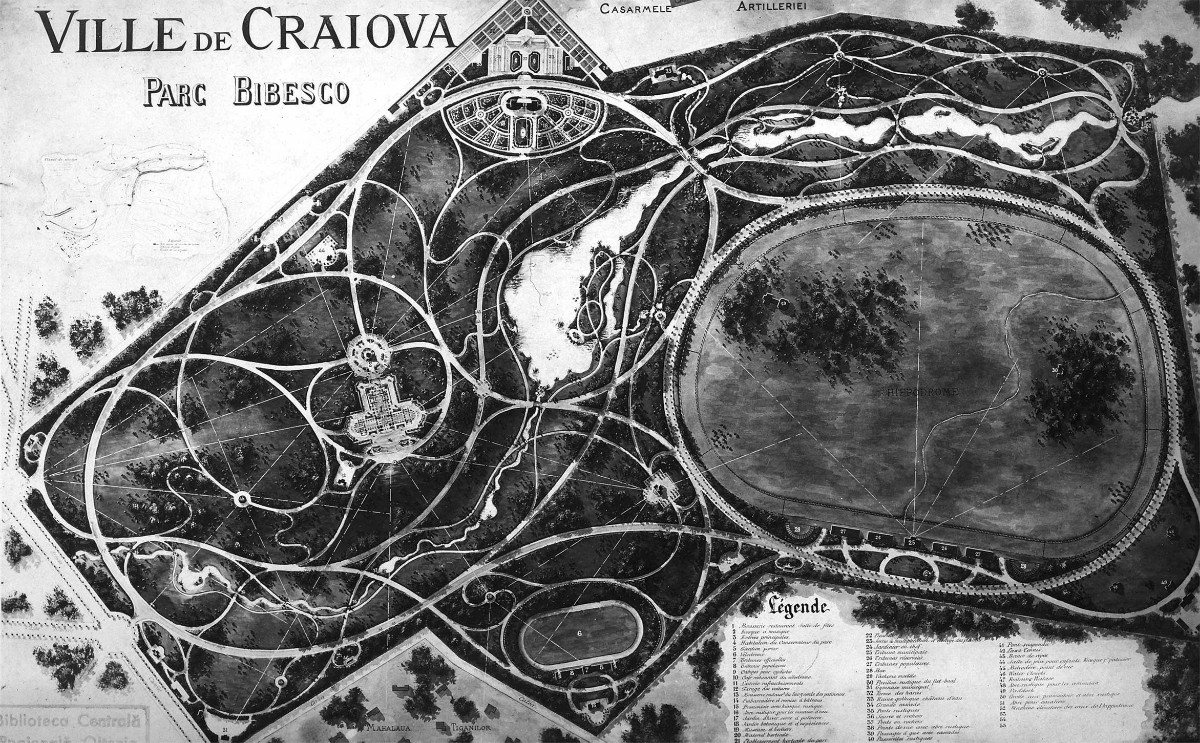
After the land was bought from Prince Gheorghe Bibescu in 1900, construction began a year later under the French architect, and the park was inaugurated on 29 September 1903 in the presence of King Carol. Redont took the design of the future Romanescu Park to the 1900 Universal Exhibition in Paris, where it was awarded the Gold Medal.
In 1943, as a tribute to the man who closely oversaw the creation of the park, a bust of Nicolae Romanescu was placed at the main entrance.
Over time many works added to the beauty of the park. Between 1954 and 1956 the portal that stands today at the main entrance was built, the park was enclosed with a fence of concrete posts and base and wire mesh, and the boathouse was rebuilt and enlarged. In 1964 the public lighting was modernised and a greenhouse of 1,050 sq m was built.
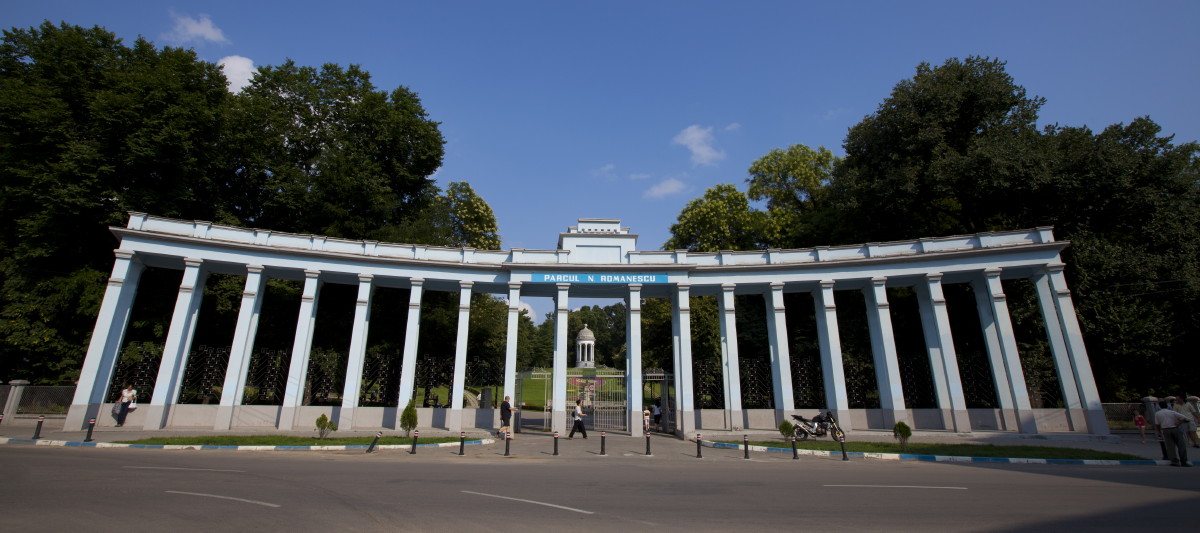
After the 1989 Revolution, the Bibescu villa became the home of Craiova’s visual artists, whose works have helped to embellish the park.
Where it is
The park is on Bulevardul Nicolae Romanescu, in the south of the city.
The main entrance is at the junction of Bulevardul Nicolae Romanescu and Strada Corneliu Coposu.
Visitor information
- Admission to the park: free
- Zoo: free admission; open 08:00–18:00
- Management: the park and the zoo belong to the Municipality of Craiova and are listed among the sites looked after by ECO URBIS Craiova
- ECO URBIS Craiova contact: +40 251 411 214
- Website: ecourbiscraiova.ro
Information checked in November 2026. Opening hours and access conditions may change; confirm before your visit.
Download the study
“Nicolae Romanescu” Park – study (PDF in Romanian, 11 pages, 5 MB), with all the photographs. The practical information in the study dates from 2016.
About the project
The film was made by Asociația Mereu pentru Europa, and the study was written in the same project: “Green School Education as a Promotion of Sustainable Use of Cultural and Natural Heritage and Resources”, code 15.2.1.001 (February 2016 – August 2017), co-financed by the European Union through the European Regional Development Fund under the Interreg V-A Romania–Bulgaria Programme. The content of this material does not necessarily represent the official position of the European Union.