

Craiova – culture and traditions: museums, theatres, festivals and a documentary film
The cultural dimension of today’s Craiova is shaped by its institutions of art and culture. Each of them – theatres, museums, cultural centres – has a long tradition and, in the spirit of that tradition, keeps renewing its presence at national level.
Text translated from the study produced in 2016 in the “Green School Education” project. The description shows the institutions and festivals as they were at that date.
Documentary film: cultural Craiova
The 16-minute film, made in the same project, presents the city’s cultural institutions. The narration is in Romanian.
With Craiova’s bid for “European Capital of Culture 2021“, the city’s cultural life became livelier. The institutions remained the same, but the number of cultural events grew significantly. The “Craiova, European Capital of Culture” Association was set up and managed many of the events. Public interest grew accordingly, as did the involvement of the local authorities, with a significantly larger budget for cultural activities.
Cultural institutions
The Art Museum
The Craiova Art Museum is housed in the most beautiful building in Craiova and indeed in Oltenia. This architectural jewel was built between 1900 and 1907 to plans by the French architect Paul Gottereau, at the request of Constantin (Dini) Mihail (1837–1908), one of the richest men in Romania at the time.
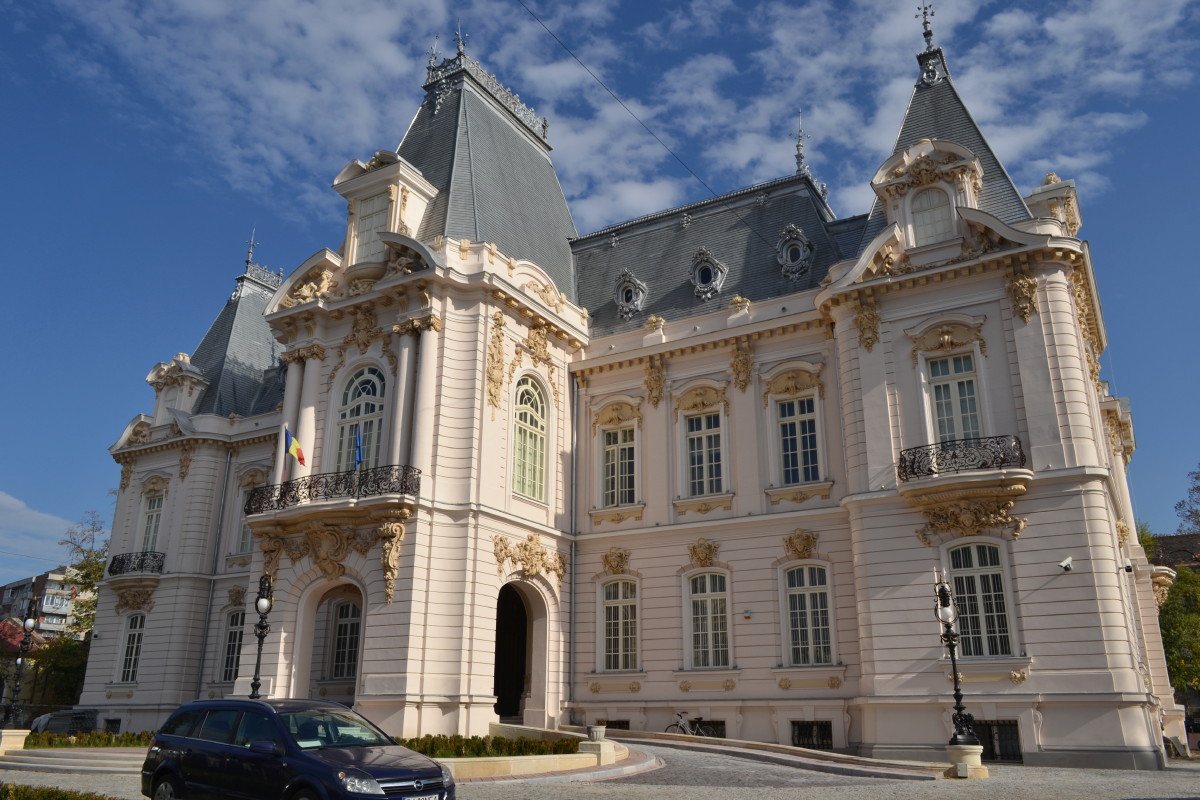
In 1954, following the decision to set up an art collection by transferring the building from the Ministry of the Interior to the City People’s Council, the palace became the seat of the Craiova Art Museum. Part of the “Alexandru and Aristia Aman” Picture Gallery was moved here; since 1908 it had been the city’s first museum (opened in the house of Grigore and Elena Lăceanu, now the “Alexandru and Aristia Aman” County Library).
The museum holds furniture and paintings of the Dutch, Flemish, Italian and French schools (mostly 17th–19th century works), paintings and graphic works by Theodor Aman, Nicolae Grigorescu, Nicolae Tonitza, Ștefan Luchian, Gheorghe Petrașcu, Theodor Pallady, Eustațiu Stoenescu, Ion Țuculescu, Gheorghe Anghel and Dimitrie Paciurea, and Romanian and foreign decorative art.
Its most valuable collection is in the Brâncuși Cabinet, with six works by the famous sculptor Constantin Brâncuși: Vitellius, Head of a Girl (Pride), Head of a Boy, The Thigh, Mademoiselle Pogany and The Kiss. More on the page Craiova Art Museum.
Oltenia Museum, Ethnography Department – Casa Băniei
Casa Băniei (the Ban’s House) is the only monument of Brâncovenesc art in Oltenia that is a civil building. Some of its walls are 300 years old, others more than 500. Today the building, raised on brick vaults, has three levels and still preserves part of the original construction. It was built at the end of the 15th century by the Craiovești boyars.
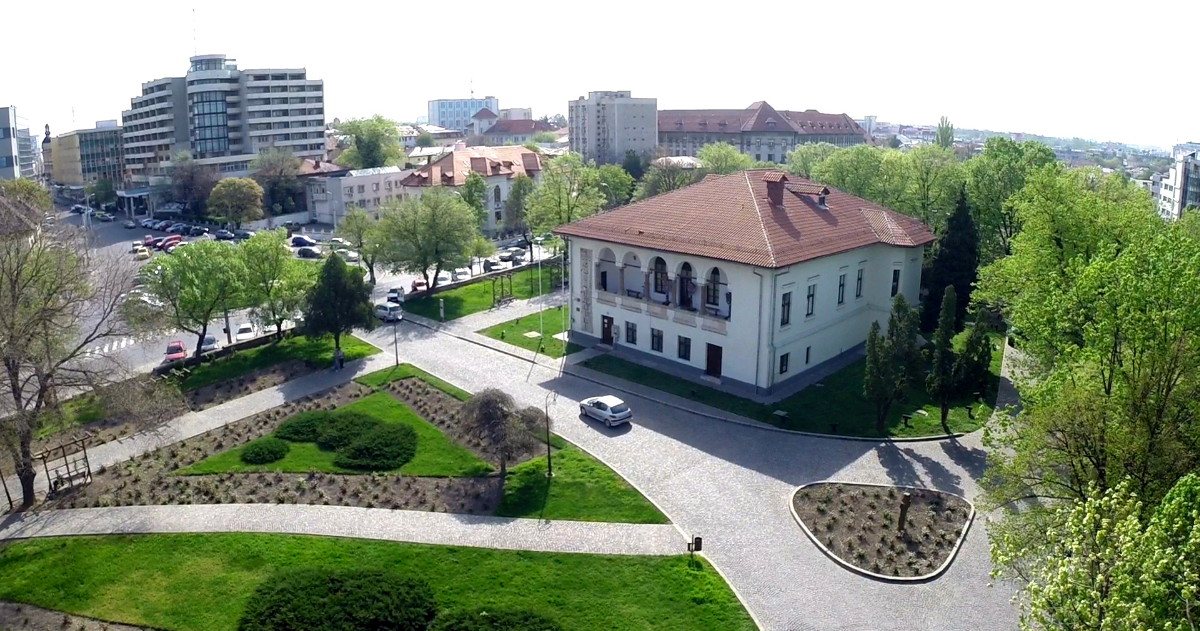
By presidential decree, since 1966 the old Brâncovenesc monument has housed the Ethnography Department of the Oltenia Museum, with a heritage of more than 9,000 pieces grouped in collections. Visitors step into the world of Oltenian folk traditions through the department’s thematic exhibitions. More on the page Casa Băniei.
Oltenia Museum – Natural Sciences Department
Address: 8 Strada Popa Șapcă, Craiova
The Natural Sciences Department of the Oltenia Museum was inaugurated on 2 December 1923 as the “Natural History Museum of Craiova“. It became a department of the Regional Museum of Oltenia five years later, on 13 May 1928. Over time it has operated in various buildings in Craiova, with or without exhibition space.
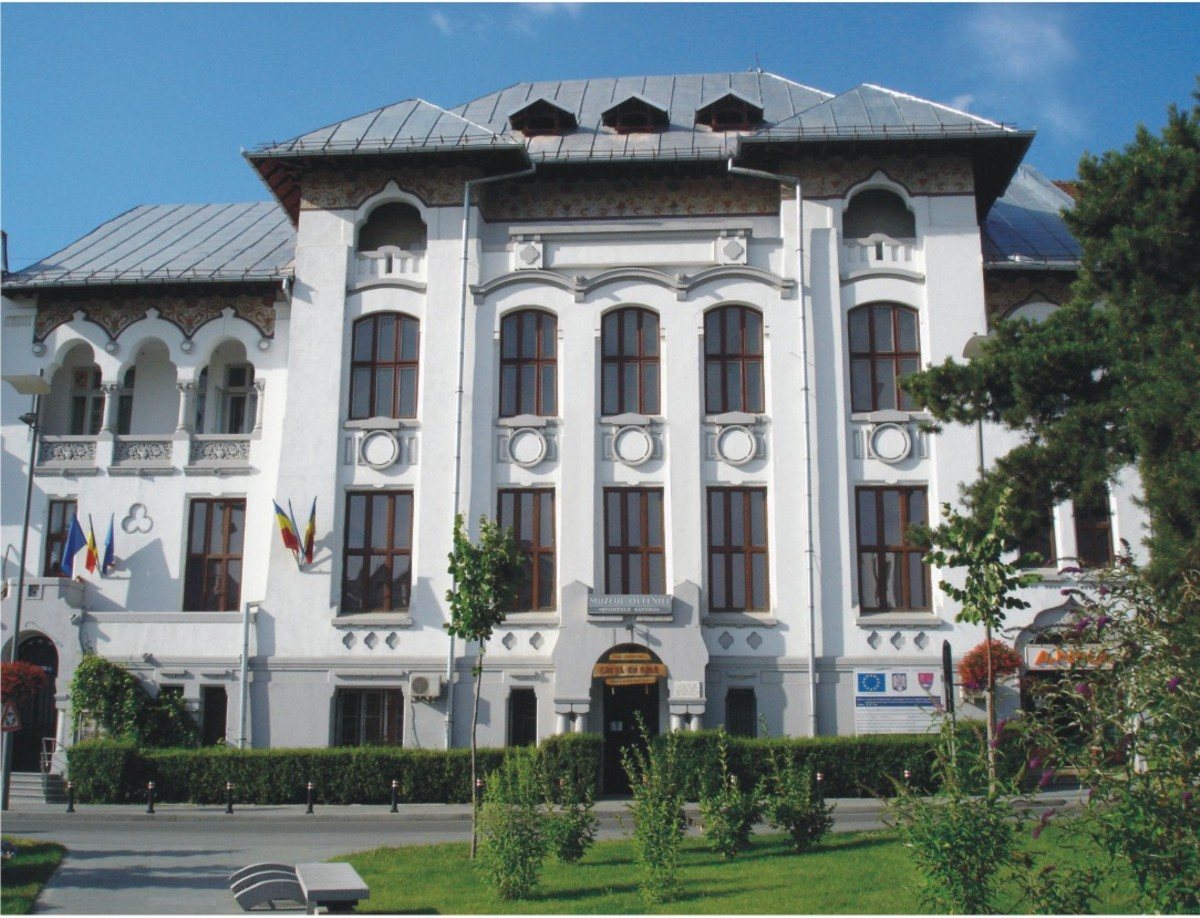
Between 1975 and 1986, for lack of suitable space, the department had no exhibitions. They resumed on 13 March 1986 with two temporary exhibitions, “Butterflies – flying petals” (scientific concept by Cornelia Chimișliu) and “From the animal world“, on the ground floor of the building at 8 Strada Popa Șapcă, where the department still operates.
For visitors who want to discover the natural beauty of Oltenia, the exhibition offers information through two interactive systems presenting the protected areas and the tourist sights of this part of the country.
The most representative ecosystems of the area are shown in dioramas. The information conveyed by the wild flora and fauna in the dioramas is completed by texts, photographs, charts and sketches on photo and light panels, and by specimens (invertebrates and vertebrates) in showcases.
Perhaps the most interesting part is the artificial cave, with two access corridors for visitors. It is a teaching cave where visitors can learn about various types of speleothems: stalactite, stalagmite, column, helical chimney, stalagmite dome, organ and others. The visit is accompanied by a soundtrack of dripping water and the calls of bats.
The department also has a permanent palaeontology exhibition, “Oltenia Terra fossilis“, a cosmogony exhibition and a planetarium.
Oltenia Museum – History and Archaeology Department
The building was commissioned by the trusteeship of the Madona Dudu Church as the seat of the Central Girls’ School (and served as such until 1948, as one of the most prestigious schools in Romania). It was built in 1905 to plans by the architect Toma Dobrescu, who also designed the Minerva Casino and the main building of Carol I College, both in Craiova.
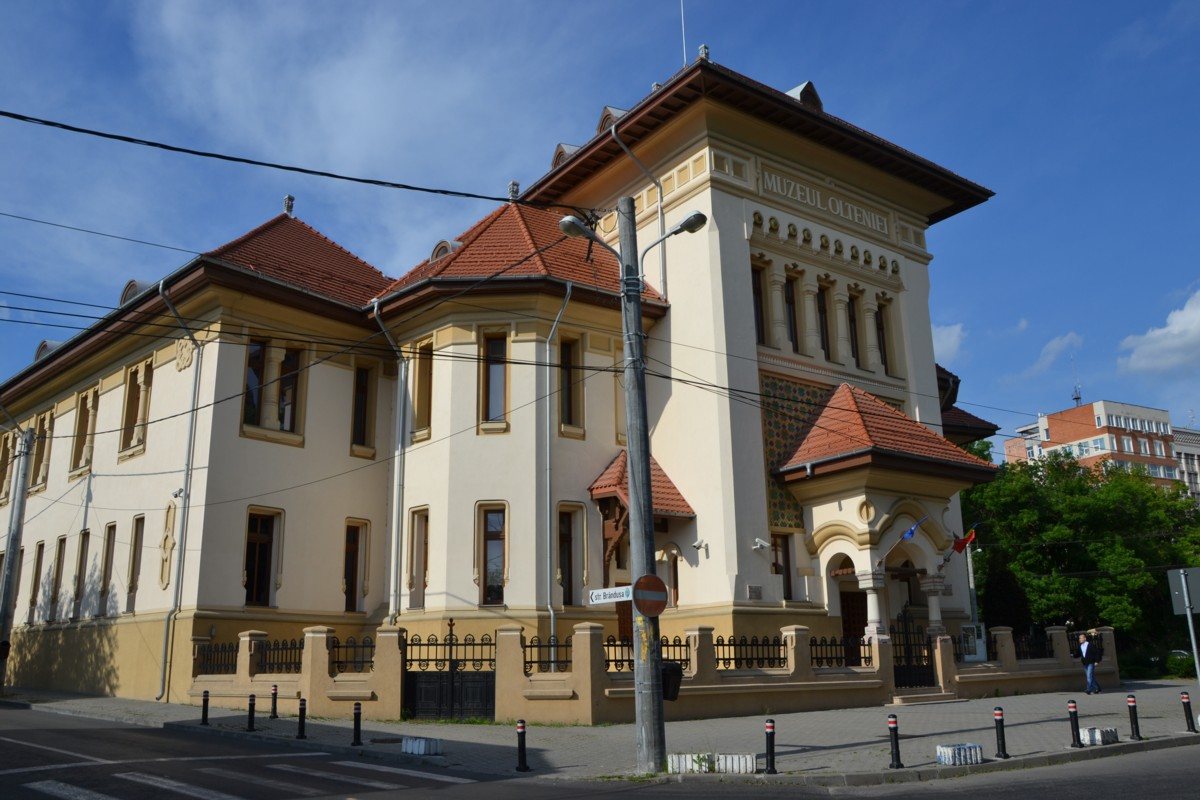
From its beginnings the Oltenia Museum set out to illustrate through its collections the continuity of the Romanian people and its struggle for independence and national unity. The institution was founded in 1915 as the Museum of Ethnography and Antiquities of Oltenia, through the efforts and guidance of Ștefan Ciuceanu, a distinguished history teacher at Carol I College.
Its priority was archaeological and ethnographic research in Oltenia. The collections were constantly enriched by excavations at Coțofenii din Dos, Plenița, Terpezița, Cioroiu Nou, Răcari, Desa, Drobeta-Turnu Severin, Sucidava and elsewhere.
At the date of the study, the History and Archaeology Department held more than 20 collections with about 170,000 pieces: coins and medals, documents, ceramics, weapons, jewellery, manuscripts, old Romanian and foreign books, memorial objects and photographs. The Oltenia Museum is one of the best-endowed museums in the country for Romanian medieval art, up to the beginning of the 19th century.
“Marin Sorescu” National Theatre
Imposing in its white marble, shining with all its lights in the heart of the city, the Craiova theatre shows a permanent youth.
Founded in 1850, the theatre was named after the writer Marin Sorescu in the years after 1990. Its present building, an architectural symbol of the city designed by the architect Alexandru Iotzu, was inaugurated in 1973.
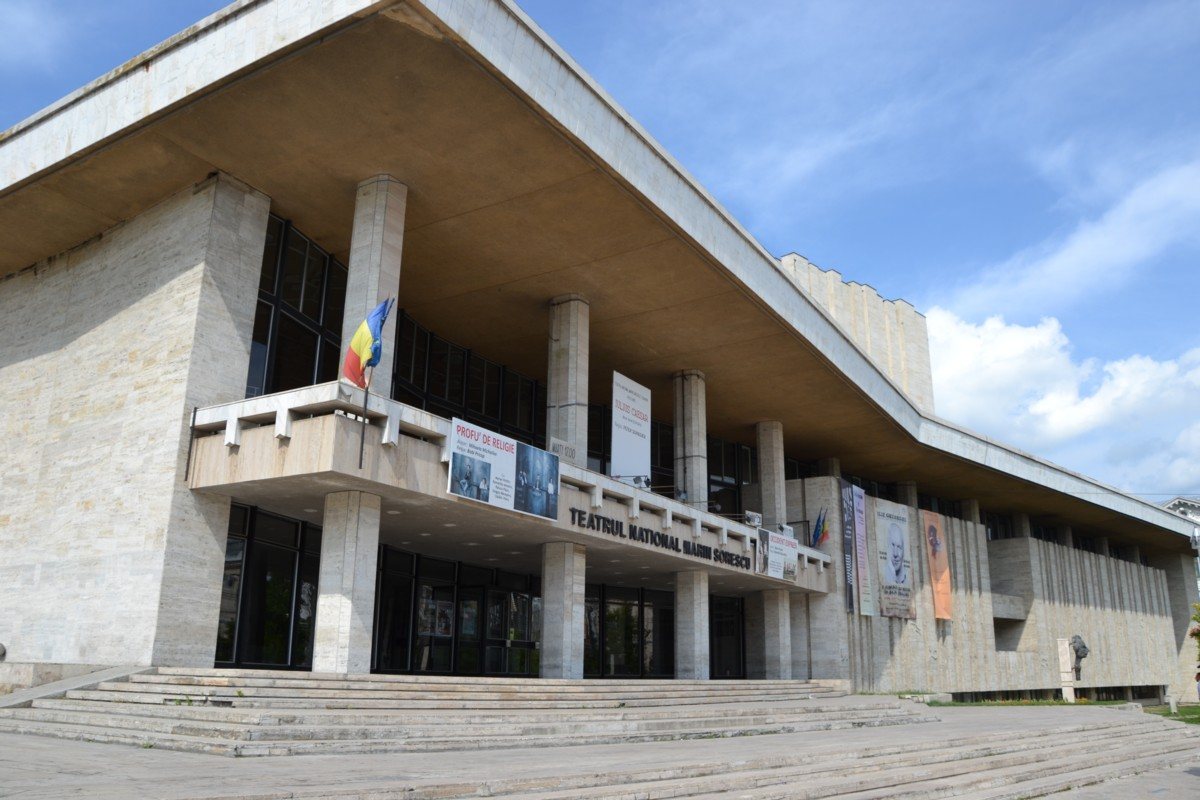
When the building was inaugurated, Constantin Gheorghiu founded the National Theatre Museum here. Its documentary collection covers the period from 1837 (the first artistic events in Craiova) to the present and includes posters, programmes, photographs, paintings, set and costume sketches, props illustrating the history of the performing arts, annotated volumes, directors’ notebooks and correspondence.
With a history of 165 years at the date of the study, the “Marin Sorescu” National Theatre of Craiova stands among the great theatres of the world through the prizes and distinctions won over time at major international festivals. It was the first theatre in Eastern Europe to become a member of the European Theatre Convention.
The square in front of the theatre bears the name of William Shakespeare, and a statue of the playwright stands there.
Interest in theatre in Craiova is old, beginning with folk performances, puppet and shadow plays and the shows of travelling troupes and circus performers. The appearance of “improvised theatre” is documented in 1596, in the “Chronicle of the reign of Michael the Brave”, arriving here through the trade relations Craiova had with Vienna, Venice, Trieste, Leipzig, Constantinople, St Petersburg and Breslau.
The Romanian Opera of Craiova
The history of the “Elena Teodorini” Lyric Theatre of Craiova, now the Romanian Opera, is closely linked to that of the National Theatre.
The foundations of a permanent theatre in Craiova were laid in 1850, but the true inaugural performance, recorded in the “History of the National Theatre of Craiova” (Aius, Craiova, 2000), took place in the autumn of 1889, with a concert by Elena Teodorini.
At the end of the 19th century one of the best operetta companies in the country was active in Craiova. These were especially fruitful years for the Craiova theatre. The Teodorini family’s concern for its fate was also shown by the creation of its own orchestra and the engagement of conductors and composers of the time to lead it: Eduard Wachmann, Alexandru Flechtenmacher, Ion Andrei Wachmann, Carl Theodor Wagner and the whole Bobescu family.
The economic crisis of the 1930s led to the closure of the theatre; the act re-establishing it was signed only in 1942. On 1 January 1972 the “Operetta Section” was set up within the “Oltenia” State Philharmonic, and its first season opened with the premiere of the operetta “Wiener Blut” by Johann Strauss II.
From 1974 the activity was structured in three areas: besides operas and operettas, a musical show for children entered the repertoire for the first time.
In May 1979 the Executive Committee of the Dolj County People’s Council issued a decision establishing the Craiova Lyric Theatre.
The Oltenia Philharmonic of Craiova
A prestigious institution in Romanian musical life, the Oltenia Philharmonic of Craiova was founded in 1904 and reorganised by royal decree in 1947. It had several forerunners. In 1885 the Harmonia Choral Society was active for a short time. In 1900 the city’s musical life was enriched by the Buciumul Craiovei Society, which included a male choir.
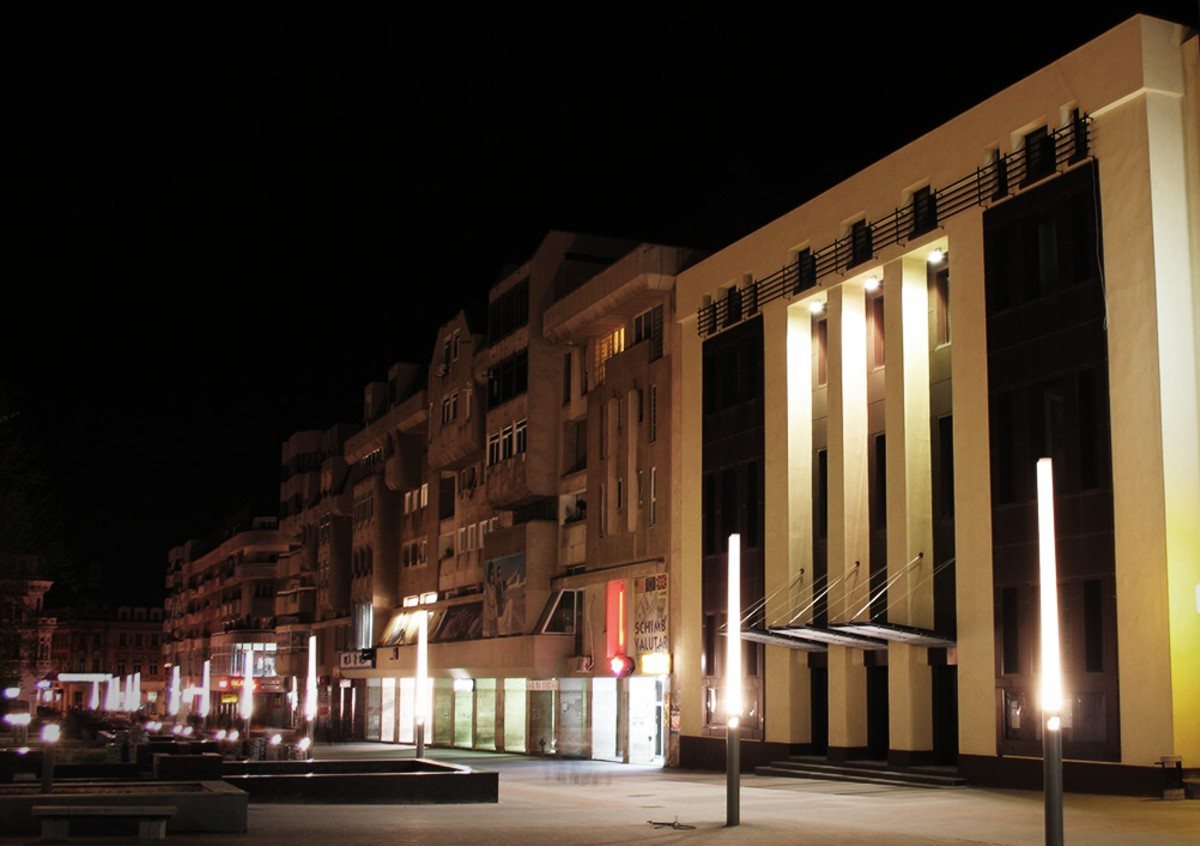
Today its artistic activity is organised in several ensembles: the Symphony Orchestra, the Chamber Orchestra, the Academic Choir and several chamber groups, bands, a symphonic jazz orchestra and others.
At the date of the study, the Philharmonic’s most ambitious project was the “Europa Season“, which ended on 20 May 2016. This complex project to promote European classical music had the support of the Ministry of Foreign Affairs and of the embassies of the European states. The season, from 23 October 2015 to 20 May 2016, included 105 events: concerts, musical colloquia, unconventional recitals, meetings with music lovers, and photography and painting exhibitions. Over the 28 weeks, guests from 28 countries came to Craiova.
“Colibri” Children’s and Youth Theatre
The “Colibri” Children’s and Youth Theatre was founded in 1949, first as the puppet theatre section of the National Theatre. It became autonomous in 1956. Fifty years later it lost the building in which it operated, and for seven years it performed on the stage of the “Elena Teodorini” Lyric Theatre (now the Romanian Opera of Craiova). In 2013, at the start of its 65th season, the theatre once again had a stage of its own: Craiova City Hall made the present premises available and financed all the repairs needed.
The “Colibri” Theatre has taken part in the most important national festivals of its kind and in international festivals in Bulgaria, Serbia, Italy, China and North Africa, winning prizes for directing, acting and stage design.
The theatre holds a rich collection of puppets, sets, props and costumes that have brought its repertoire to life over the years, created by great stage designers such as Eustațiu Gregorian, Cristina Pepino and Eugenia Tărășescu-Jianu. Lovers of puppetry can often see these creations on Open Days and in the theatre’s exhibitions, at its premises or on tour, such as the exhibition The Book, the Puppet, the Story, shown in Arad, Târgu Jiu, Slatina and Drobeta-Turnu Severin.
“Traian Demetrescu” House of Culture
The “Traian Demetrescu” House of Culture has promoted Romanian culture and the arts in Craiova since 1973. It operates in the former house of the Romanian poet Traian Demetrescu. It supports and promotes mainly Craiova artists, as well as other cultural organisations in the city, through poetry readings, dance and music performances and other events.
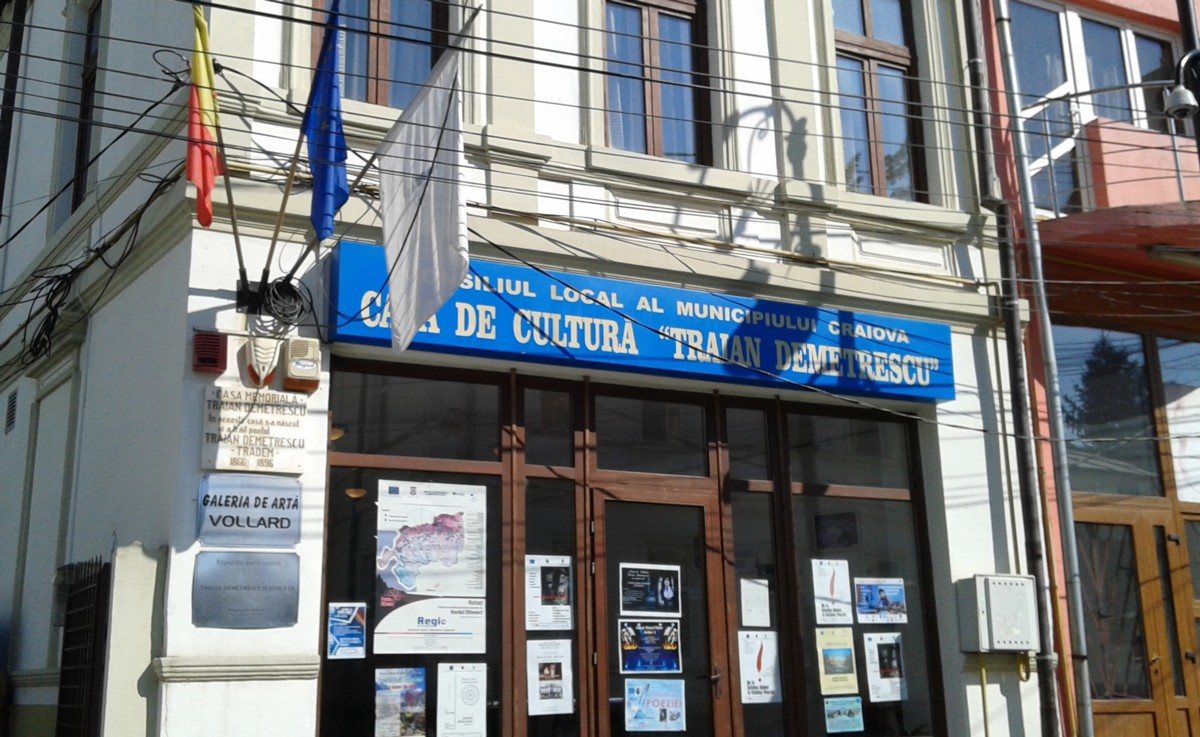
The institution has several annual projects, among them:
– The International Stone Sculpture Symposium “Drumuri brâncușiene” (Brâncuși Roads), held every year from 1 to 31 August. The artists carve in front of the public and must finish their work within 31 days. The works are made in blocks of Vratsa stone and Rușchița marble and, once finished, become the property of the city and enrich its monumental heritage.
– Tradem Week, held every autumn around 3 November, the birthday of Traian Demetrescu, the spiritual patron of the House of Culture. It includes literary and artistic events, open days for visiting the writer’s memorial room and the award ceremony of the “TRADEM” National Poetry Competition, which reached its 38th edition in 2016. The competition is open to poets who have not yet published a volume and are not members of the Writers’ Union of Romania, and has a section for translations of Traian Demetrescu’s poems into five international languages (English, French, Italian, Spanish, German).
– Scheherazade’s Night, held on World Book and Copyright Day, celebrated every year on 23 April under the auspices of UNESCO. It is a night of public readings by established writers from Oltenia, members of the Writers’ Union of Romania, and by promising young authors, winners of literary competitions or contributors to cultural magazines.
– The International Festival-Competition “Vreau să cânt” (I Want to Sing), held annually in October or November to promote young musical talent. It is open to young vocal soloists aged 7 to 18 who have never been under contract with professional orchestras, ensembles or bands. The competition has two sections, light music and folk music, and four age categories.
– The International Performance Poetry Festival, held every year in November or December, brings well-known names from the national and international literary and artistic scene. It relies on interactivity, multicultural dialogue and a blending of the arts: the artist does not simply recite the poem but presents it through a mix of poetry, theatre, music and painting. Besides the performances, the project includes workshops for secondary-school and university students, poets and actors, led by the invited artists.
– The National Symposium “Craiova and the European Avant-garde”, a cultural event that promotes national and international literary and artistic values relevant in today’s European context, and in particular the Romanian avant-garde artists of European stature who contributed to the development of Romanian literature and art.
Besides these annual projects, the House of Culture organises various other events: photography, painting and graphic art exhibitions, book launches, dance classes and more.
“Alexandru and Aristia Aman” County Library
The history of the County Library, the former Lăceanu House, is linked to the generous act of Alexandru and Aristia Aman of Craiova, who founded here a valuable establishment consisting of a library, a museum and a picture gallery, opened on 21 December 1908 in the presence of the Minister of Public Instruction, Spiru Haret. In 1915 the Oltenia Museum and the Picture Gallery (which became the Art Museum in 1954) were organised separately from the Aman Foundation.
The library began with 2,523 volumes donated by the founders: works of literature, art, history, law and philosophy in Romanian, French, Greek and Latin, inherited by the family, bought by Alexandru Aman during his studies in Paris, purchased in Romania or received during his lifetime. After the poet Elena Farago took over its management (in September 1922), the library grew quite quickly, through purchases and through donations from cultural and scientific institutions and private book lovers.
The library now operates in three buildings, one of which is the “Elena Farago” Memorial House (1878–1954). The permanent exhibition in the rooms where the poet lived has 396 exhibits: original documents, photocopies, family photographs, letters, furniture, personal objects, books and magazines.
“Cornetti” People’s School of Art
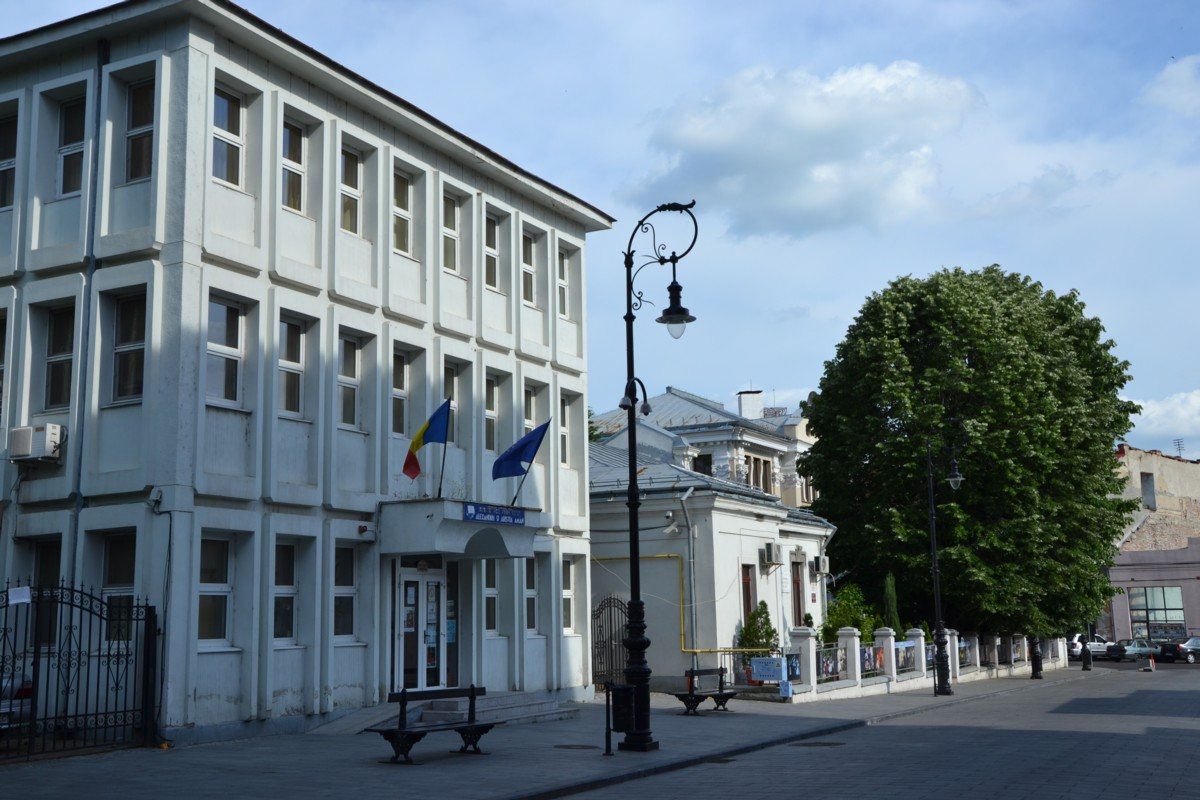
This is a public cultural institution providing amateur arts education under the authority of Dolj County Council. The Cornetti School runs programmes in lifelong learning, traditional culture and folk creation.
Dolj County Centre for the Conservation and Promotion of Traditional Culture
It was founded on 1 December 1955 by state decree as the Regional House of Folk Creation of Oltenia, an institution meant to guide and supervise amateur artistic activities, at a time when the emphasis was on the idea of mass culture.
Over time the institution has had other names; since 2003 it has borne its present title.
The centre’s aims are ethnological and anthropological research; the conservation (archiving) of the traditions and lasting values of folk culture and their protection against degradation; the development of tradition in the present; the encouragement of folk creation in all artistic genres; and the promotion of the creators and performers of authentic tradition.
“Maria Tănase” Folk Ensemble
Formed in 1992 as a successor to the great “Nicolae Bălcescu” ensemble of Craiova, to give stage expression to the diversity of Oltenian folklore and to folklore from all regions of Romania, the “Maria Tănase” Folk Ensemble has won well-deserved success and renown over the years, in Romania and abroad.
The staging of traditional dances and the consistent promotion of authentic folk song have made it one of the most representative and valuable ensembles in Romania.
The ensemble consists of a dance section of 22 dancers, an orchestra of 13 instrumentalists and 12 soloists.
Its quality has been rewarded at national and international festivals in Greece, Egypt, France, Italy, Germany, Spain, Bulgaria, Yugoslavia, Turkey and Iran.
Besides the usual venues, unconventional places for cultural events have appeared in Craiova, especially in summer. One of them is “Frații Buzești” Square, brought to life by the renovation of Craiova’s Old Town. Countless concerts, plays and festivals, especially of medieval art, take place here.
Festivals
Many cultural and artistic events take place in Craiova during the year. These are the most important:
The International Shakespeare Festival
Several theatre, music and poetry festivals are held in Craiova during the year, some of them a tradition of many years. The largest and best known is the “International Shakespeare Theatre Festival“, first held in 1994. The tenth edition took place in 2016, from 14 to 23 April. Personalities from all over the world come to Craiova to discover, even after 400 years, new and unexpected approaches to Shakespeare’s work.
The 15th edition of the “Europe Theatre Prize“, the most prestigious European theatre award, and the 13th edition of the “Europe Prize Theatrical Realities” were also held in Craiova, from 23 to 26 April 2016.
The organisation in Craiova of the Europe Theatre Prize, together with the International Shakespeare Festival, is clear proof of the appreciation and trust enjoyed by the festival and by Romanian culture in the world.
“Puppets Occupy Street” Festival
The largest puppetry festival Oltenia has ever had and one of the biggest events of its kind in Romania, “Puppets Occupy Street” – inspired by the “occupy” street movement – aims to make the most of the creative potential of the puppeteers’ guild and to delight as many spectators as possible, of all ages. It is held every year in August–September.
The festival has parades with giant puppets and street animation, performances in parks, in the centre of Craiova and in the neighbourhoods, creative workshops, screenings of animated films and stage design exhibitions.
“Craiova Muzicală” International Festival
A traditional artistic event, emblematic of Craiova’s cultural identity, the “Craiova Muzicală” International Festival is held every year in November–December and, from 2013 (its 40th, anniversary edition), under the High Patronage of His Majesty King Michael I.
The festival includes more than 40 events of different types and styles: symphonic and vocal-symphonic concerts, opera, early music performed on period instruments and in period costume, chamber music, instrumental and vocal recitals, rock, folk and jazz concerts and film screenings.
“Ioana Radu” National Festival
Every two years, in October–November, a festival bearing the name of the famous singer Ioana Radu recalls her unforgettable songs, above all to her beloved Oltenians. The festival is a tribute to the performer of whose voice Nicolae Iorga said that it was “as pure as spring water”, and George Enescu that it worked wonders he “wished for his violin as well”.
The first edition took place on 7–8 October 1998 in the Moorish Room of the Minerva Palace in Craiova, where Ioana Radu made her debut. The second was held on 1–2 November 2000 in the hall of the Craiova Lyric Theatre. Since 2004 the festival has been held on the stage of the National Theatre.
“Maria Tănase” National Festival-Competition of Romanian Folk Song Performers
A complex event of a high artistic level – its programmes have included competition concerts and recitals, performances in various places in Dolj and the other counties of Oltenia, scientific sessions, colloquia of radio and TV folklore producers, craft fairs and folk costume parades – the competition has brought to Craiova a large number of established instrumental and vocal soloists, accompanied by prestigious orchestras from Romania and the Republic of Moldova.
The “Maria Tănase” Festival-Competition (held every two years, alternating with the “Ioana Radu” Festival) is open to amateur vocal and instrumental artists, including soloists from Romanian communities abroad, aged between 16 and 35.
The 22nd edition, held on 14–19 October 2013, had a special significance: it marked 100 years since Maria Tănase was born in Bucharest, on 25 September 1913, and 50 years since her death, on 22 June 1963.
“Elena Teodorini” International Festival
Meant to honour the memory of the spiritual patron of the Romanian Opera of Craiova, the “Elena Teodorini” International Festival stands out as a very important cultural event in the city, alongside the “Craiova Muzicală” International Festival of the Oltenia Philharmonic and the International Shakespeare Festival of the National Theatre. The 13 editions held up to the date of the study brought to Craiova audiences and specialists the best of the national and European lyric stage: representative productions by well-known artists from Romania and abroad, from established performers (singers, ballet soloists and actors) to directors, stage designers, choreographers and conductors of international standing.
The first edition took place from 16 June to 11 July 1992 on the stage of the then “Elena Teodorini” Lyric Theatre. In 2013 the first “Elena Teodorini” International Singing Competition was also held (6–9 November), open to opera singers of any nationality and all voice types.
Pelendava Ancient Festival
In the autumn of 2013 a new festival made its debut in Craiova, meant to revive the days when the Dacian ancestors, “the most just and the bravest of the Thracians”, fought the Romans for the fortress of Pelendava or made merry and competed in sports in peacetime. The “Pelendava” Ancient Festival invites spectators to discover the history of the Geto-Dacian people with a healthy dose of good cheer.
Shows with well-known names of Romanian theatre, period costumes, sets, horses and armour, and above all professional stunts, are applauded by thousands of people. The historical story is also told through concerts of ancient music, light-hearted contests with symbolic prizes for the public and sports events. The festival’s events take place in various parts of Craiova: “Mihai Viteazul” Square, “Frații Buzești” Square, Romanescu Park and others.
Also worth mentioning are the International Sound & Slam Poetry Festival, the “Adrian Păunescu” Days, the “Traian Demetrescu” International Epigram Festival, the “Summer Traditions” festival of customs, the “Mereu Tânăr” (Forever Young) Theatre Festival, the “St John Chrysostom” Oratory Festival, the “Marin Sorescu” Days and the “Mihai Viteazul” Days.
Visitor information
- Craiova Art Museum: 15 Calea Unirii; Tuesday–Sunday, 10:00–17:00; phone +40 251 412 342.
- Oltenia Museum: all departments are open Tuesday–Sunday, 09:00–17:00. History and Archaeology: 14 Strada Madona Dudu, phone +40 251 417 756. Natural Sciences: 8 Strada Popa Șapcă, phone +40 251 411 906. Ethnography (Casa Băniei): 16 Strada Matei Basarab, phone +40 351 444 030.
- Oltenia Museum tickets (from January 2026): 12 lei adults, 5 lei pensioners and students, 3 lei pupils and preschoolers, per department. The single online ticket, valid for 15 working days in all departments, costs 30 lei for adults.
- “Marin Sorescu” National Theatre: 11 Strada Alexandru Ioan Cuza; the box office is open Monday–Friday 11:00–19:00, Saturday and Sunday 12:00–19:00; phone +40 251 413 677; online tickets at ebilet.tncms.ro.
- Oltenia Philharmonic: 16 Calea Unirii; phone +40 251 412 334.
- Romanian Opera of Craiova: head office at 3 Strada Popoveni; phone +40 351 405 496.
- “Colibri” Children’s and Youth Theatre: 56 Calea București.
Information checked in November 2026. Opening hours and prices may change; check before your visit.
Download the study
Craiova – culture and traditions – study (PDF in Romanian, 23 pages, 8.3 MB), with all the photographs. The practical information in the study dates from 2016.
About the project
The film was made by Asociația Mereu pentru Europa, and the study was written in the same project: “Green School Education as a Promotion of Sustainable Use of Cultural and Natural Heritage and Resources”, code 15.2.1.001 (February 2016 – August 2017), co-financed by the European Union through the European Regional Development Fund under the Interreg V-A Romania–Bulgaria Programme. The content of this material does not necessarily represent the official position of the European Union.